Hey everyone, it’s Jake from your go-to refrigeration unit supplier—just wrapping up a week of fielding calls from folks who messed up moving a unit last minute, and let’s be real, that’s a headache no one needs. Last Tuesday, a local food distributor called me panicking because their driver threw a brand new unit in the back of their delivery truck, straight onto its side, and now the compressor’s making that weird grinding noise that means “you’re gonna drop $4k on repairs fast.” So today, I’m breaking down the real, no-BS precautions for transporting these bad boys—stuff we learn from 12 years of not just selling units, but helping guys like you get them where they need to go, safe and sound. No fancy jargon, no recycled manuals, just what actually works. Refrigeration Unit
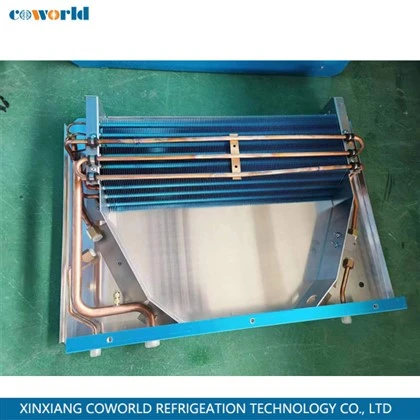
First off, let’s cut the crap: refrigeration units aren’t just big metal boxes with a fan. There’s a whole system inside—compressor, evaporator, condenser, that slippery liquid refrigerant everyone warns you about—and if you mess with their positioning, all that stuff’s gonna shift, leak, or break. I’ve seen a guy use a random tarp to strap a unit to his pickup, hit a pothole, and the entire compressor slide out of its mounting bracket onto the highway. Never. Do. That.
First big rule: Figure out the orientation before you even load it. Everyone says “keep it upright” but wait—what’s “upright”? That’s not just standing straight like a flagpole. For most standard medium- and heavy-duty units, the compressor has a sump of oil inside it, right? If you tip it more than like 15 degrees (even a little!) during transport, that oil drains out of the sump and gets into the refrigerant lines, the condenser, the evaporator—now you’ve got a system that’s not lubricated when you turn it on. Boom, seized compressor. That’s a $3,500 mistake, and I’ve heard that exact horror story three times this year alone.
Wait, but I know what some of you are thinking: “I gotta move a small under-counter unit, can I lay that down?” Yeah, small ones—like the ones for walk-in coolers or small delivery vans—can usually lay flat, but only if they’re the kind with a “horizontal transport” label on the unit or in the specs. Even then, max lay angle is like 30 degrees, and you’ve gotta check the oil level before powering it up. Pro tip: If you’re ever not sure, call us before you load. We don’t care if it’s 7 PM on a Friday, we’d rather you ask than replace a unit that was fine until transport.
Next up: loading equipment. You don’t need a fancy forklift for every single unit, but what you do need is the right gear. Ditch the rope and a come-along if you can—use a flatbed with a hydraulic lift gate, or at least a pallet jack rated for the unit’s weight. Speaking of weight, don’t guess it! Check the unit’s spec sheet (we send these to every customer when they order) and make sure your lift gear can handle at least 10% more than that number—safety factor, people. Last month, a customer tried lifting a 1,200-pound unit with a pallet jack only rated for 1,000, and it dropped half a foot, cracked the condenser coil. $800 in damage, all because he skipped checking the rating.
Also, when you’re lifting, never grab it by the corners or the thin metal housing. The right lift points are the reinforced brackets welded onto the frame—those big, thick metal spots that have “lift here” stamped on them. If you don’t see them, again, call us. We’ll send you a diagram, no problem. I’ve seen guys hook straps onto the control panel (the little plastic part with the buttons) and yank it right off. Not helpful.
Once it’s loaded, the securing part is non-negotiable. I don’t care if you’re moving it 2 blocks or 200 miles—those units bounce, and if they shift, that’s damaged coils, broken lines, or even a unit falling out of the truck. Use heavy-duty ratchet straps, not rope or bungee cords. Rope stretches, bungees snap when you hit a bump. We recommend at least 4 straps: two on the front of the unit, two on the back, each fastened to the truck’s anchor points (not the side rails—side rails bend). If it’s a super heavy unit, add two more on the sides. Pro move: Put foam padding between the straps and the unit’s frame so the metal doesn’t rub and scratch the paint, which can lead to rust later.
Wait, another thing: don’t stack anything on top of the refrigeration unit. Even a small box of tools or empty pallets can dent the condenser or evaporator coils, which are the delicate parts that make the unit cool. A tiny dent in a coil block airflow, and suddenly your unit is running 24/7 and wasting electricity. I had a customer last year who stacked a case of soda on top of his new unit, and a week later, his grocery store’s cooler was at 50 degrees because the coils were blocked. Bad time.
Now, temperature control during transport—this one’s way more important than you think, especially if you’re moving the unit in hot or freezing weather. If it’s 90 degrees out and your truck’s back is unventilated, the unit can get overheated inside, melting any plastic parts or damaging the refrigerant. If it’s 20 degrees out in the winter, the refrigerant can thicken, and when you power the unit up, it won’t flow right. Our general rule: if moving in extreme temps (over 85°F or under 32°F), either keep the unit in a climate-controlled truck, or keep transport time under 4 hours. If you gotta go longer, crack the truck’s back doors a little for ventilation, but not so much that rain gets in.
Oh, and never power test the unit before you give it time to settle! I know some drivers want to make sure it works right away, but if you just finished moving a unit, especially if it was tipped even a little, that oil I was talking about? It’s sloshing around inside. If you plug it in right away, that oil can flood the compressor, which breaks it immediately. Wait at least 2 hours for every 10 degrees of tilt. So if you kept it perfectly upright, 2 hours. If it was at a 15-degree angle, 3 hours. Even better, wait 4 hours—you’re not gonna lose anything by waiting, and you’re gonna save a ton of money on repairs.
Wait, let’s talk about common mistakes we see all the time that people don’t even realize are mistakes. First, ignoring the manual. Every unit comes with a transport section in the manual—yes, even the online PDF we send. Most people don’t read past the price when they order, so they miss the line that says “do not transport with refrigerant lines connected” for certain models. If the lines are connected, moving the unit can bend them, causing leaks. That’s a simple thing to disconnect, but 90% of the time, folks skip it because it’s “one more step.”
Another one: not protecting the control panel. That little digital screen on the front? It’s not indestructible. If you’re tossing boxes around the truck, the control panel can get hit, crack, and stop working. We always tell customers to put a hard plastic cover over the control panel when transporting, or at least wrap it in a thick moving blanket. Last month, a guy forgot that, and a loose tool bag busted his control panel. Replacement part was $500, and he had to wait a week for it to ship—cost him a $2,000 week in lost refrigeration for his restaurant. Ouch.
And hey, if you’re moving a used unit? Wait, no—even new units, the same rules apply. I’ve had customers buy a used unit from a private seller, skip the transport precautions, and ruin it before they even get it hooked up. Doesn’t matter if it’s new or used, those parts are still delicate.
Now, let’s wrap this up with the quick cheat sheet you can keep in your truck: 1) Orient within 15 degrees upright, max 30 degrees lay for small units, call us if unsure. 2) Use reinforced lift points, rated lifting gear. 3) Secure with 4+ heavy-duty ratchet straps, add foam padding. 4) Don’t stack anything on top. 5) Avoid extreme temp exposure, keep transport under 4 hours if needed. 6) Wait 2-4 hours before powering up, no matter how eager you are.
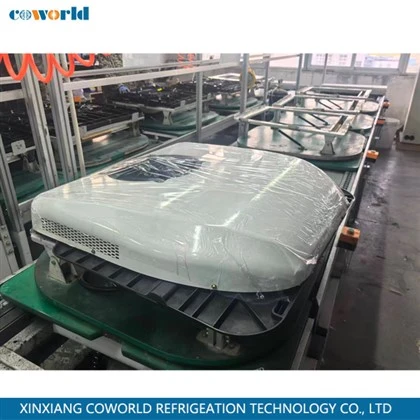
At the end of the day, we’re not just selling you a refrigeration unit—we’re selling you a tool that keeps your food safe, your business running, and your profits up. We’ve been in this game long enough to know that one stupid transport mistake can wipe out weeks of good work. So if you’re planning a delivery, or just have questions about moving your unit, hit us up. Whether you need help figuring out lift points, want a copy of the transport manual, or just need to talk through your plan, we’re here. Don’t gamble with a $5k unit over a little planning. Reach out to us, and we’ll make sure your refrigeration unit gets to its destination in one piece, ready to work for you.
Refrigerated Truck Body References:
- ASHRAE Handbook: Heating, Ventilating, and Air-Conditioning Systems and Equipment (2022)
- Refrigeration Equipment Transport and Handling Guidelines, Air-Conditioning Contractors of America (ACCA) (2021)
- Commercial Refrigeration Unit Installation and Maintenance Best Practices, North American Refrigeration Association (NARA) (2023)
- OEM Transport Recommendations for Medium-Duty Truck Refrigeration Units, TransAire Manufacturing (2022)
Xinxiang Coworld Refrigeration Technology Co., Ltd.
As one of the most professional refrigeration unit manufacturers and suppliers in China, our products have good reputation in the market. We warmly welcome you to buy cheap refrigeration unit for sale here from our factory. If you have any enquiry about cooperation, please feel free to email us.
Address: B103 ROOM, GT CITY, NO.199 ZHENGZHONG ROAD, HIGH TECH ZONE, XINXIANG CITY, HENAN PROVINCE, CHINA
E-mail: coworldfrio@hotmail.com
WebSite: https://www.coworldthermo.com/
