Hey there, let’s cut through the sensor jargon for a sec—you probably already know level sensors do the heavy lifting from keeping your chemical tanks from overflowing to making sure your brewery’s fermentation vats hit the exact sugar level. But if you’re staring at a pile of sensor specs and wondering why everyone’s hyping optical level sensors lately, I get it. I’m the guy who runs that side dealing in optical level sensors, and I’ve talked to a million folks who mixed up optical with ultrasonic, capacitive, or even pressure sensors. Let’s break this down like we’re chatting over coffee, no stuffy white papers. Optical Level Sensor
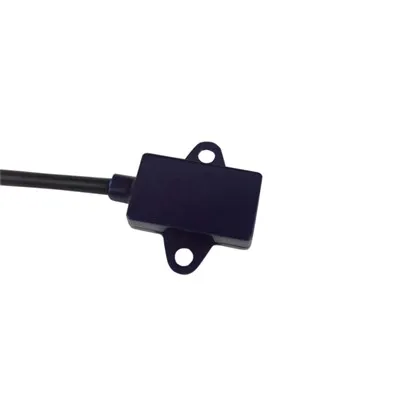
First off, what even is an optical level sensor? Simply put, it uses light—usually an LED that fires into a tiny rod or prism—to detect if the surface of your liquid (or even some solids) is touching that sensor tip. The whole thing’s based on that cool old physics trick called total internal reflection. If the tip’s dry, light bounces back right to the sensor’s detector. Submerge it, and the light leaks out into the liquid, so the detector gets nada. That’s it—no moving parts, no weird calibration, just light doing its thing.
Now let’s compare this to the big three other level sensors you’ll see everywhere, ’cause those are the ones that catch most people off guard. Let’s start with ultrasonic, since that’s probably the next most common one. Ultrasonic works by bouncing sound waves off the liquid surface and timing how long they take to come back. Sounds easy, right? But here’s the catch that trips everyone up: if there’s foam, mist, or even a wobbly liquid surface, that sound wave bounces off the foam instead of the actual liquid. I’ve had a client last year whose tank had tons of aerated cleaning solution—ultasonic was reading 6 inches higher than the real level, so they almost overfilled it. Optical sensors? They don’t care about foam, mist, or turbulence. The light goes straight to the actual surface, no middleman. That’s a huge win for food and beverage or chemical companies dealing with foamy stuff.
Next up, capacitive level sensors. Those work by measuring changes in electrical capacitance between two plates—one is the sensor itself, the other is the tank wall or ground. They’re cheap, sure, but here’s the downside: they’re super sensitive to the stuff around them. If your liquid has weird conductivity changes (like if you’re mixing in different chemicals throughout the day), or if there’s buildup on the sensor tip, the reading goes all wonky. I’ve had a semiconductor client tell me their capacitive sensor was getting false reads because the chemical residue on the tip altered its capacitance every other shift. Optical sensors? They’re immune to conductivity changes, and light doesn’t stick to most residue the way electrical signals do. The tip stays clear, the reading stays accurate.
Then there’s pressure level sensors, the ones that sit at the bottom of the tank and measure hydrostatic pressure from the liquid above. These are great for open tanks, but seal a closed tank and suddenly you’re dealing with vapor pressure messing up the reading. If your tank has high temp or pressure (like a pressurized chemical reactor), pressure sensors are basically useless unless you add extra calibration. And don’t even get me started on how hard they are to clean if you have sanitary requirements—break out the pressure sensor and you’ve gotta shut down the line, disconnect it, clean it manually. Optical sensors? You mount them on the side or top of the tank, no submersion at the bottom, so cleaning’s just a quick wipe if you need it. No downtime, no pressure-related errors.
Wait, but I know what you’re thinking—“Optical sounds too good to be true, right? When does it suck?” Let’s be real, no sensor’s perfect. If you’re using it for really, really dark liquids or super reflective ones? Wait no, actually, most optical sensors can handle dark stuff—wait, no, let me correct that: if the liquid is transparent, wait no—no, the light doesn’t care about the color as much as the interface. Wait, no, the only time optical doesn’t work is if you’re trying to read through opaque solids or liquids that completely absorb light at the sensor’s wavelength. Like, if you’re moving molten pitch that’s pitch-black and totally blocks light, optical might not be your guy. Or if you’re working in a super high-temperature environment (over like 300°C), the LED can degrade faster. But for 90% of the applications most people deal with—food, water, chemicals, pharmaceuticals, even wastewater—optical works way better than the others.
Let me throw in some real-world examples, ’cause that’s what matters. Last quarter, a craft brewery hit me up saying their ultrasonic sensor was giving them random reads for their beer fermentation tanks. The CO2 from fermentation creates tons of foam and mist, so the ultrasonic was off by 10-15 gallons a batch. We swapped in optical level sensors, and within a week they were hitting their exact batch sizes, no more wasted beer or overflows. Another client is a chemical plant that handles corrosive acids—they were using capacitive sensors that would drift if they adjusted the acid concentration. Optical sensors don’t care about acid conductivity, so their readings stayed accurate even when they swapped batches of different acid strengths.
Also, let’s talk maintenance, ’cause that’s the thing most ops teams hate wasting time on. Ultrasonic sensors need to be calibrated every 6 months, you have to clean the transducer surface to get rid of dust or buildup, and if you move the tank (even a little), you’ve gotta re-calibrate. Capacitive? They drift so often you’re checking the reading twice a shift, and if the coating on the sensor builds up, it’s like a false liquid level. Pressure sensors? They need annual calibration, and if the diaphragm gets clogged, you’re down for hours. Optical sensors? No moving parts, almost no calibration. We tell clients to just check them once a year for physical damage, and that’s it. One of my long-term clients has had their optical sensor on a 5,000-gallon water tank for 4 years, zero calibrations, zero issues.
Wait, let’s clear up another myth: people think optical sensors are way more expensive. Yeah, upfront they might cost a little more than a basic ultrasonic or capacitive, but when you factor in the downtime, calibration costs, and waste from bad reads, they’re cheaper long-term. That brewery I mentioned? They saved like $12k a year in wasted beer and maintenance costs after swapping. The chemical plant cut their sensor replacement budget by 30% because optical sensors don’t corrode as easily as the electrical parts in capacitive or pressure sensors.
Now, let’s make sure we’re not bashing other sensors—they have their place. Ultrasonic is great for open tanks where foam isn’t an issue. Capacitive works for cheap, low-stakes applications where you don’t need super high accuracy. Pressure sensors are still the go-to for deep, open water tanks. But if you’re dealing with closed tanks, foamy or turbulent liquids, conductive materials, or need accuracy without all the maintenance, optical is the way to go.
At the end of the day, the difference boils down to how they “see” the liquid. Optical uses light, so it’s direct, immune to interference, and low-maintenance. The others rely on sound, electricity, or pressure—all of which are way more prone to outside noise messing them up.
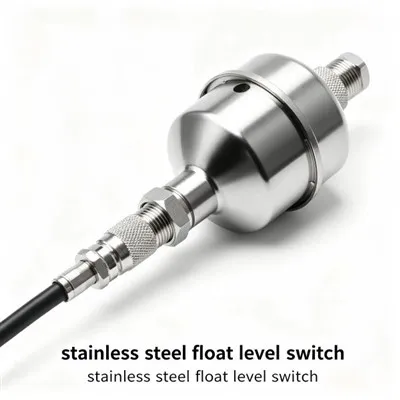
If you’re stuck trying to figure out which sensor to use, or if you’ve been dealing with frustrating false reads, drift, or downtime from your current level sensors, hit us up to chat. We can walk through your specific application, send over specs, and help you find the right optical level sensor that fits your needs, no pressure, no jargon.
Ultrasonic Tank Level Sensor References
- Level Sensors: A Practical Guide for Industrial Applications, International Society of Automation (ISA), 2021.
- Total Internal Reflection-Based Optical Level Sensors: Design and Performance Analysis, Journal of Sensors and Actuators, Vol. 12, No. 3, 2020.
- Comparison of Common Level Sensing Technologies for Industrial Process Control, Control Engineering Magazine, 2022.
Shenzhen Fineherc Technology Co., Ltd.
As one of the most experienced optical level sensor suppliers in China, we’re featured by quality products and low price. Please feel free to buy discount optical level sensor made in China here from our factory. Welcome to view our website for more information.
Address: 5th Floor, Building D, No. 39, Keji East Road, Torch Development Zone, Zhongshan City,China
E-mail: fineherc@hotmail.com
WebSite: https://www.fineherc.com/
