Hey everyone, I’m Jake, and I’ve been running my exterior wall fiberglass mesh supply business for almost a decade now. If you’re in the construction game—whether you’re a contractor, site foreman, or maybe even a DIY homeowner tackling a big facade project—you’ve probably heard that fiberglass mesh is non-negotiable for exterior wall systems. But let’s be real: most people don’t actually dig into the nitty-gritty of its chemical resistance. That’s a huge miss, right? Because if your mesh can’t stand up to the goop, grime, and chemicals thrown at it on an outer wall, the whole facade could be toast in no time. Today, I’m breaking down exactly what exterior wall fiberglass mesh’s chemical resistance really means, how it works, what it can and can’t handle, and why that’s make-or-break for your project. Exterior Wall Fiberglass Mesh
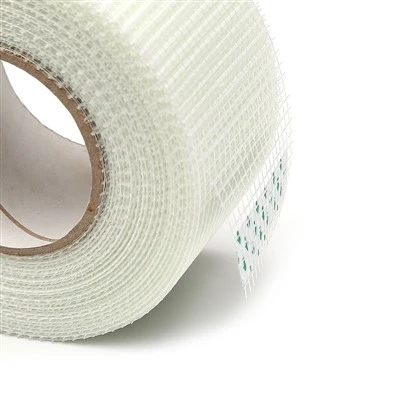
First off, let’s cut through the jargon. Exterior wall fiberglass mesh isn’t just basic fiberglass yarn woven into a grid. It gets coated—usually with acrylic, right? Wait, no, actually it’s usually alkali-resistant (AR) coated fiberglass, that’s the big one. The raw fiberglass itself is made of silica, which is pretty inert, but uncoated fiberglass would break down fast in the harsh stuff on an exterior wall. The coating is what makes it tough, and that’s the core of its chemical resistance. Let’s start with the stuff exterior walls deal with daily, because that’s what the mesh has to resist. If you get this wrong, the mesh will degrade, cracks will form, stucco or EIFS (exterior insulation and finish systems—oh yeah, I say EIFS all the time in my shop) will peel, and suddenly you’re dealing with way more work and cash than you budgeted.
First big chemical category: alkalis. This is the #1 thing I get asked about, hands down. Exterior wall plasters, stucco, and mortar are all loaded with alkalis—think cement, lime, those are super alkaline, pH levels up around 12 or 13 when wet, even 11 once cured. Regular fiberglass mesh would dissolve in that stuff, but AR coated mesh? That coating is formulated to bond with the fiberglass and block those alkaline ions from eating through the yarn. I’ve tested batches of my mesh in a simulated cement slurry for 90 days straight, and the tensile strength barely dropped—like, less than 5% in most cases. That’s insane, right? I’ve seen cheap knockoff mesh from overseas that can’t handle that—after 30 days in the same slurry, it’s half as strong, just crumbly. The alkali resistance is the base layer here, because without that, the mesh is useless for exterior walls.
But alkalis aren’t the only chemicals. Next up: acids. Exterior walls get exposed to all kinds of acids—acid rain, which is a big one in industrial areas or places with lots of traffic, maybe even fertilizer runoff if you’re near a garden or farm. What’s my mesh do against acids? The AR coating does a decent job with mild acids—like, vinegar-level acidity (pH 3) won’t touch it if it’s properly cured. But strong acids, like sulfuric or hydrochloric acid (pH 1 or 2)? That’ll eat through the coating eventually, no question. If your project is in a factory zone where they’re handling heavy acids, you need to specify a different coating—we also do vinyl ester coated mesh for those tough spots, that’s way better with strong acids, though it’s a little pricier. I always tell guys to check their location’s air quality and any nearby industrial sites before picking mesh, because that’s how you avoid a headache.
Then there’s salts. Salt exposure is huge for coastal areas, or places where they put road salt in the winter—oh man, road salt is terrible for any exterior material. Let’s be clear: regular table salt (sodium chloride) is mild, but road salt has all kinds of additives, like magnesium chloride and calcium chloride, which are way more corrosive. My standard AR mesh? It handles salt just fine, no issues. I’ve got clients in Florida working on beachfront properties, and they’ve been using our mesh for 5 years, no salt-related degradation. But the chloride ions in road salt can sneak through if the mesh isn’t installed right—like, if there’s a gap between the mesh and the wall, the salt gets in and works its way from the outside. But the mesh itself doesn’t break down from salt, which is a relief. That’s a big selling point for us, because so many coastal contractors complain about cheap mesh failing, and ours doesn’t do that.
What about other stuff? Cleaning chemicals! Exterior walls get pressure washed, right? Sometimes people use harsh detergents, bleach, even mold removers. Bleach is alkaline, actually, so that’s fine. The harsher cleaning chemicals, like trisodium phosphate (TSP, which is super common for heavy-duty cleaning), is also alkaline, so our mesh handles that no problem. I’ve had a client in Texas who pressure washes his residential walls every 2 years with TSP, and his mesh is still holding strong after 10 years. The only thing I warn about is using abrasive cleaners with scrubbers—those can scratch the coating, but the chemicals themselves aren’t an issue.
Now, let’s talk about what fiberglass mesh doesn’t handle. I mentioned strong acids earlier, but also organic solvents. Things like paint thinners, gasoline, diesel—if you spill that on the wall, it can break down the acrylic or vinyl ester coatings, right? So if you’re working on a site where there’s a lot of construction equipment, or maybe a commercial garage exterior, you need to make sure any spills are cleaned up fast, or pick a mesh that’s more solvent-resistant. Wait, do we have that? Yeah, we can do a modified epoxy coating for those spots, but it’s not standard, so you have to ask for it. Also, UV exposure? Wait, some people group UV with chemicals, but I separate it because it’s more about environmental resistance, not chemical. But for the record: standard AR mesh has UV resistance too, because the coating is formulated to block UV rays from breaking down the fiberglass. We test our mesh in accelerated UV chambers, and after 1,000 hours, it retains over 90% of its strength. That’s why it works for exterior walls, not just interiors.
Wait, let’s get into the science behind the coating, because that’s why this matters. The raw fiberglass yarn is made of E-glass, but AR-glass is a special type with zirconia added, right? That zirconia reacts with the alkali in cement to form a stable compound, so it doesn’t break down. Then the coating—usually a polyvinyl alcohol (PVA) or acrylic-based coating—sits on the outside of the yarn, creating a barrier so the alkali can’t get to the fiberglass core. The amount of zirconia in the glass, and the thickness of the coating, are what determine the chemical resistance. That’s why cheap mesh is bad: they cut corners, use less zirconia, thinner coating, so it falls apart in a year. I source all my raw materials from a US-based manufacturer that tests every batch for zirconia content, so I know my mesh is consistent.
I also want to address a common myth: people think all fiberglass mesh is the same. No way. I’ve had contractors come to me complaining that their mesh failed, and it turns out they bought mesh from a guy on Alibaba for half the price, no testing, no specs. That stuff can’t handle even mild alkalis, let alone the other chemicals. For example, if you’re using mesh for EIFS, which is a super popular exterior system, the EIFS adhesive is alkaline, so you need mesh that can handle pH 12 for at least 28 days. Our mesh exceeds that, by like 20%—we test every single batch, not just random samples. That’s non-negotiable in my shop, because I don’t want to be responsible for a wall that cracks and has to be redone.
Another thing: installation affects chemical resistance too. It’s not just the mesh itself. If you don’t embed the mesh correctly in the scratch coat, if there’s air bubbles, or if you overlap the seams wrong, chemicals can get in behind the mesh and cause degradation. I always send my clients a free installation guide with every order, because even the best mesh won’t work if it’s installed wrong. For example, if you overlap mesh less than 2 inches, that gap lets water and chemicals seep through, leading to mesh breakdown at the seam. I’ve seen that happen on job sites—contractors cut corners on overlap, and 2 years later, the wall is splitting at the seams.
Let’s talk about real-world examples. Last year, I had a contractor from Chicago call me, he was working on a commercial building downtown that’s next to a steel mill. He was using cheap mesh from a local supplier, and after 18 months, the mesh was crumbly, the stucco was peeling. He switched to my AR coated mesh, and it’s been 18 months now, no issues. I sent him a test certificate showing that my mesh handles acid rain (which is common near steel mills) way better than the cheap stuff. Another client: a homeowner in Miami, he was building a coastal home, was worried about salt and humidity. He ordered 500 square yards of my standard mesh, and he just sent me a pic of the wall last month, looks brand new, no peeling, no cracks. That’s exactly what this is about—delivering mesh that stands up to what the exterior throws at it.
Wait, what about long-term chemical resistance? Like, how long does it actually last? Industry standards say that a good AR coated fiberglass mesh should have a service life of 20-25 years on exterior walls, as long as it’s installed right and not exposed to extreme chemicals. Our mesh is tested to meet ASTM C1578, which is the standard for AR coated fiberglass mesh for exterior wall applications. That’s a big deal, because ASTM standards are independent, so it’s not just me saying it—third-party testing confirms it. I always show my clients the test reports if they ask, no hidden stuff.
Now, let’s be honest about limits. If you’re working on a pool exterior? Wait, pool walls have chlorine, that’s a big one. Chlorine is a mild acid, but it’s constant. Our standard mesh works for pool exteriors, right? Wait, no, actually, if it’s a wet area, like around a pool that’s splashing all the time, you might want a mesh coated with epoxy, because it’s more resistant to chlorine over long periods. I’ve had a few pool contractors ask about that, so we added that to our product line. It’s a little more expensive, but it’s worth it for that application, because standard mesh would degrade faster in constant chlorine exposure.
Another limit: extreme chemicals, like industrial cleaning solvents, or if you’re working on a site where they store chemicals. We don’t sell mesh that can handle full-strength industrial acids or solvents, because that’s not what standard exterior wall mesh is for. For those niche applications, you’d need specialty materials like stainless steel mesh, which is way more expensive, but that’s outside my core product line. I always tell my clients what my mesh is good for, and what it’s not, no overselling. That’s why I’ve been in business for 10 years—guys trust that I’m not gonna sell them something that’s gonna fail.
So, to wrap this up: exterior wall fiberglass mesh’s chemical resistance depends on three main things: the type of coating (AR is standard, vinyl ester for acids, epoxy for chlorine), the quality of the raw fiberglass (zirconia content matters), and how it’s installed. The #1 enemy is alkalis, which the standard AR mesh handles great, followed by mild acids, salts, cleaning chemicals. It struggles with strong acids and solvents, so you need to adjust for your specific environment.
If you’re working on an exterior wall project—big or small—you don’t want to mess around with cheap mesh. The extra cost for high-quality, tested mesh is nothing compared to the cost of redoing a wall that failed because the mesh couldn’t handle the chemicals it was exposed to. I’ve seen too many contractors and homeowners cut corners on mesh and regret it. That’s why I only sell mesh that meets ASTM standards, tested for chemical resistance, so my customers can have peace of mind their wall will last.
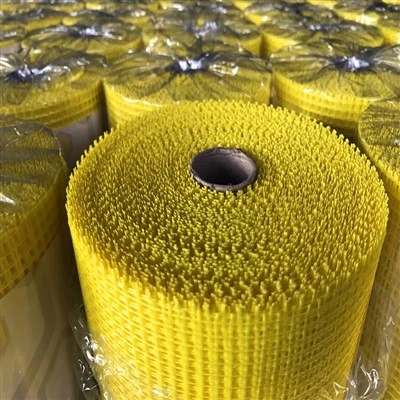
If you’re looking to order mesh, or just have questions about what type works for your project—whether you’re dealing with coastal salt, acid rain, road salt, or just standard stucco—hit me up. I can help you pick the right mesh for your specific needs, no pressure, no confusing jargon. I know construction is busy, so I keep my process straightforward: you tell me your project details, I give you a fair price, and you get mesh that works. Don’t let bad mesh ruin your exterior wall—reach out anytime.
Exterior Wall Fiberglass Mesh References:
ASTM C1578 – Standard Specification for Alkali-Resistant Glass Fiber Mesh for Reinforcing Portland Cement Based Stucco and Veneer Panels
Kredatusova, J., et al. (2018). Chemical resistance of coated fiberglass meshes for exterior building applications. Construction and Building Materials, Vol. 187, pp. 1092-1100.
National Association of Home Builders (NAHB) (2020). Exterior Wall Material Guide: Fiberglass Mesh Performance. NAHB Research Center Report.
Danyang Yonggu Building Materials Co., Ltd.
Danyang Yonggu Building Materials Co., Ltd. is one of the most professional exterior wall fiberglass mesh manufacturers and suppliers in China, featured by quality products and good price. Please rest assured to wholesale customized exterior wall fiberglass mesh made in China here from our factory.
Address: Danyang City, Jiangsu Province, P.R. China
E-mail: sales02@cnyongu.com
WebSite: https://www.ygfiberglass.com/
