When I was a new motorcycle mechanic back in 2008, a regular customer rolled a 2006 Suzuki Bandit into my shop and asked why his “wheels felt funny” every time he hit 60 miles an hour. I jacked it up, spun each tire, and saw the problem immediately: his rear rim had a tiny, almost unnoticeable warp in the barrel, caused by a pothole he’d hit a month prior. He’d ignored it, and by the time he came to me, it had thrown his balance so far off he was dangerously close to a crash. That moment stuck with me—ever since I started our motorcycle wheel supply business five years ago, I’ve answered one question more than any other: How often should I replace my motorcycle wheels? Motorcycle Wheels

It’s not a question with a one-size-fits-all answer, and part of that is because “replace” doesn’t always mean the whole wheel. Some riders can fix a minor bend or cosmetic crack without swapping out the rim, while others need to pull a full wheel after a single impact. Let’s break down what actually determines your wheel’s lifespan, how to tell when yours needs attention, and the red flags that mean it’s time to order a new set instead of tinkering.
First, let’s get one thing straight: motorcycle wheels aren’t made to last forever, and their longevity depends entirely on how you ride, what you ride, and how you maintain your machine. I see this constantly as a supplier. Riders who commute 50 miles a day on city streets, hitting curbs and potholes weekly, go through wheels faster than weekend cruisers who stick to backroads. Off-road riders face even harsher conditions—rocks, mud, and hard landings from jumps turn rims into stress points fast. Even the material matters: steel wheels, common on older bikes and budget models, are more durable in high-impact situations but prone to rust if not cleaned regularly. Aluminum alloy wheels, which most modern sportbikes, touring bikes, and cruisers use, are lighter and stronger overall but crack easier under repeated stress.
That said, there’s no official timeline like “replace every 20,000 miles” or “swap when your bike turns 10 years old.” I’ve supplied wheels to a guy who’s put 80,000 miles on his 2010 Harley-Davidson Street Glide with the original wheels, and they still look almost new. Last month, I shipped two new rims to a kid who crashed his brand-new Yamaha R3 into a guardrail on his way home from the dealership—his original wheels only lasted 300 miles. So mileage is a rough guide, not a rule. The real factors to track are condition, use, and regular checks.
Let’s start with the most common warning signs that your wheel needs immediate attention. The first is obvious: a visible bend or warp. If you jack up your bike and spin each wheel, watch the gap between the tire and the swingarm or fork. If the gap changes as the wheel turns, that’s a warp. Minor bends (less than 3 millimeters, roughly the thickness of a quarter) can sometimes be fixed by a professional wheel truing shop, but any bend bigger than that? It’s a safety hazard. Warped wheels throw off your alignment, make steering pull to one side at speed, and can cause the tire to lose air slowly over time. I’ve seen riders try to hammer out a bend themselves, only to end up with a rim that cracks down the road. Don’t do that.
Next, cracks. Cracks show up in two places: the spoke nipples (if you have spoked wheels) or the rim barrel itself (if it’s a cast alloy wheel). Small, superficial cracks on the outer edge of the rim—like a tiny chip from a road debris—are usually fine, but any crack that extends toward the center hub or the bead seat (the part that locks the tire onto the wheel) is a problem. For spoked wheels, if you see a crack at the base of a spoke nipple, that means the stress from tight spokes has weakened that section, and the wheel could fail under hard acceleration or braking. Cast alloy wheels are more prone to sudden cracks from impacts, and once a crack is longer than half an inch, there’s no safe way to repair it. Cast aluminum can’t be welded and trued the same way steel can—it risks failing when you’re leaning into a turn, which is the last thing you want mid-corner.
Then there’s rust and corrosion, especially on steel wheels. Steel rusts if you leave it sitting in the rain, don’t wash road salt off in the winter, or don’t seal the rim properly. Surface rust is easy to scrub off, but rust that eats through the metal, especially around the spoke holes or bead seat, will weaken the wheel’s structure. I had a customer last winter who brought in a 1998 Honda Shadow with steel wheels that had rusted completely through the spoke holes. He’d put off replacing them for two years, thinking surface rust was just cosmetic, and by the time he tried to true them, the holes were so thin the spokes kept pulling through. That’s a safety issue you can avoid if you check your wheels for rust every time you clean your bike.
So when do you actually need to replace your wheels, and when can you keep going? Let’s talk about the repair vs. replace line. Minor bends (under 3mm) are repairable, as are small cracks on non-critical areas. A good truing shop can fix a slightly warped alloy wheel or spoked wheel, and a steel wheel with light rust can be sanded, sealed, and reused. But here’s the rule I live by as a wheel supplier: if the damage affects the wheel’s structural integrity, don’t repair it. Period. That includes bends over 3mm, cracks on the bead seat or hub mounting area, rust that has pitted through the metal, or a wheel that’s been in a major crash (even if it looks undamaged, internal stress could cause it to fail later).
How often should you inspect your wheels, even if there’s no obvious damage? I recommend every time you do an oil change, or at least once every 1,000 miles. That’s about every two weeks for a daily commuter, every month for a weekend rider. To check them, jack up your bike so both wheels are off the ground, spin each wheel by hand, and run your finger along the gap between the tire and the frame/fork. If the gap stays consistent, you’re good. If it widens or narrows in spots, that’s a warp. For spoked wheels, grab each spoke and wiggle it gently—if any feel loose or have play, that’s a sign they’re pulling the rim out of true. For all wheels, shine a flashlight along the inner and outer edges of the rim to look for small cracks or rust spots.
Now, let’s talk about different riding styles, because that changes how often you’ll need to replace your wheels. Sportbike and supersport riders, who ride hard, brake aggressively, and lean into turns at high speeds, will go through wheels faster than most. The constant stress of hard acceleration and braking, plus road debris kicked up from other cars, wears on the rim and spokes. I sell more replacement wheels to sportbike riders than any other group, usually every 15,000 to 25,000 miles, depending on how aggressive they are. Touring riders, who carry heavy luggage and do long highway miles, also face wheel stress from constant vibration and heavy load. I’ve found most touring wheels last 25,000 to 40,000 miles if maintained properly. Cruiser riders, who do mostly steady cruising on backroads, tend to have the longest-lasting wheels—many can go 50,000 miles or more before needing replacement. Off-road riders? Their wheel lifespan is all over the place. If you’re only hitting trails on weekends, your wheels might last years. If you’re racing motocross or doing hard enduro every weekend, you might need a new rim every few months, after every big crash or hard landing.
One thing I always tell riders is that it’s not just about wear and tear—quality matters. A cheap aftermarket wheel from a no-name brand might look the same as an OEM wheel, but it’s made with thinner aluminum or worse casting process, so it bends or cracks easier. When you replace your wheels, don’t cut corners. We’ve had customers come to us after buying “budget” wheels online that warped within 1,000 miles, because the manufacturer skipped quality control checks on the rim barrel. OEM wheels are made to exact specifications for your bike, but a reputable aftermarket wheel supplier (like us, for example) makes wheels that meet or exceed OEM standards, often at a lower price. Our wheels go through pressure tests, truing checks, and impact tests before they leave our warehouse, so you know they’ll hold up.
I also can’t stress enough how important maintenance is to extending your wheel’s life. For spoked wheels, check spoke tension every month. Loose spokes put uneven stress on the rim, leading to warps and cracks. For alloy wheels, wash them regularly with mild soap and water, avoiding harsh chemicals that can eat at the finish and cause corrosion. If you live in a place with road salt in the winter, wash your wheels thoroughly after riding to remove salt, which is the #1 cause of rust on steel wheels. Store your bike in a dry place, not outside in the rain or snow—moisture leads to rust and corrosion, even on alloy wheels.
Let’s circle back to that first story I told about the Suzuki Bandit. That customer came back to me three years later, after he’d learned how to spot wheel damage. He checked his rims every month, caught a small crack on the rear rim from a rock chip, and replaced it before it turned into a safety issue. He still has that Bandit today, and it’s still running strong. That’s the goal here: wheel replacement shouldn’t be a surprise, it should be a planned, safety-focused decision.
So to sum up, there’s no set frequency for replacing your motorcycle wheels, but you can follow these guidelines: Inspect your wheels every 1,000 miles for bends, cracks, and rust. Replace the entire wheel (or rim, if you’re only swapping the barrel) if you have a bend over 3mm, a crack on the critical bead seat or hub area, or structural damage from a crash or heavy corrosion. Keep in mind that riding style, maintenance, and wheel quality will all impact how long your wheels last—sportbikes and off-road bikes need replacements more often than cruisers, and regular cleaning and spoke checks can add thousands of miles to your wheel’s life.
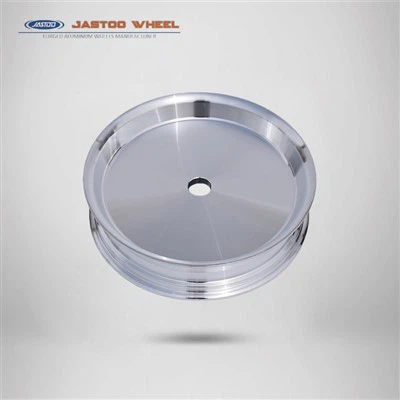
At the end of the day, your wheels are the only part of your bike that touches the road. You wouldn’t ride with worn brake pads or old tires, so don’t ignore your wheels either. If you notice any of the warning signs we talked about, or if you just want to replace your wheels with durable, OEM-quality parts that won’t let you down on the road, feel free to reach out to our team to discuss your needs. We can help you find the right wheels for your bike, whether you need a single replacement rim, a full wheel set, or parts for custom builds. Don’t wait until a small damage turns into a dangerous crash—stay on top of your wheel maintenance, and ride safe.
Military Truck Wheels References
Motorcycle Safety Foundation. (2021). Rider Handbook: Pre-Ride Inspection Guidelines.
American Motorcyclist Association. (2022). Motorcycle Wheel Maintenance and Safety Standards.
Society of Automotive Engineers (SAE). (2020). Performance Requirements for Motorcycle Wheels.
QHD New Light Vehicle Engineering & Technology Co., Ltd.
QHD New Light Vehicle Engineering & Technology Co., Ltd. is one of the most professional motorcycle wheels manufacturers and suppliers in China, specialized in providing the best customized service. If you’re going to buy or wholesale high quality motorcycle wheels with competitive price, welcome to get quotation from our factory.
Address: No.16 Songhuajiang Road, Development Zone, Qinhuangdao City, Hebei, China
E-mail: sales@gftwheel.com
WebSite: https://www.jastooforgedwheel.com/
