If you’ve ever shopped around for pneumatic parts, you’ve probably spotted brass connectors mixed in with steel, plastic, and even nickel-plated options. As a brass connector supplier who’s fielded this question a hundred times already, let me cut to the chase: yes, you can use brass connectors in most pneumatic systems—but there’s a whole lot more to it than a simple “yes” or “no.” Let’s break this down like we’re chatting over a coffee in our warehouse, no stuffy engineering jargon unless it actually matters. Brass Connector

First, let’s get one thing straight: not all brass is created equal. Most of the brass connectors we make for pneumatics are lead-free, which is non-negotiable these days for industries like food and beverage, pharmaceuticals, or anything handling compressed air that might touch products or people. But even that brass comes in different alloys: C360, C260, and so on. C360 is the workhorse—hard, machinable, resistant to general corrosion, and cheap enough that we can pass savings along to our customers. It’s perfect for the average pneumatic line that runs at 100 to 150 PSI, the sweet spot for most factory automation, packaging lines, or small workshop setups.
Why brass beats other materials for many pneumatic jobs? Let’s start with corrosion resistance. Steel connectors, while strong, rust when exposed to moisture in compressed air lines. Even if you coat them, that coating can chip over time, leading to leaks or debris in your system. Plastic ones? They’re lightweight, but they can crack if the air gets too hot, or swell if the line carries certain chemicals (think: some industrial cleaning agents or refrigerants used in certain systems). Brass, on the other hand, holds up to the moisture that’s unavoidable in most compressed air setups. Sure, it can tarnish a bit, but that’s just a surface layer that doesn’t eat away at the connector’s strength—no leaks there, usually. Another big plus: brass has great malleability, so it’s easy to machine into tight tolerances. That means a better seal between the connector and your hoses or tubes, which cuts down on air waste. Let’s be real—no one likes throwing money away on compressed air escaping through a bad connection.
Now, the fine print where things get tricky. If you’re running a pneumatic system at super high pressure—like 200 PSI or more, or for industrial heavy-duty stuff that hammers connectors with constant, extreme force—brass might not be your best bet. It’s not as strong as steel or some specialty alloys, so over time, repeated pressure spikes could cause it to weaken, especially if it’s a lower-grade brass. Also, if your system uses corrosive air—like if you’re pumping air with high levels of sulfur or other harsh chemicals, common in some mining or chemical processing plants—brass can corrode faster than you’d expect. We’ve had customers in those fields come to us after trying standard brass connectors only to have them fail in six months, because their air supply was too tough on the material. And let’s not forget temperature: brass starts to lose its structural strength when it’s consistently exposed to temps above 400°F, which is way higher than most pneumatic lines, but if you’re working with near that heat, you’ll want a different material.
Wait, there’s also something people don’t talk about much: brass and compatibility with other metals. If you’re connecting a brass connector to a steel pipe or a copper tube, you might run into galvanic corrosion. That’s when two different metals react in the presence of moisture, like a tiny battery. The good news? We can coat our brass connectors with a thin nickel layer (or a Teflon lining) that acts as a barrier, preventing that reaction. It’s a small add-on that’s worth it if your system mixes metal types.
Let me throw in a real customer story to make this concrete. Last year, a guy named Jake from a small packaging plant in Ohio hit us up, panicking. He’d been using steel connectors in his line that runs 120 PSI, but after a few months, they started rusting, and his line was leaking 15% of his compressed air. That’s huge—compressed air is expensive to generate, so 15% waste was costing him hundreds a month. We sent him a batch of our standard C360 brass connectors, no special coatings, and he installed them. Six months later, he called back to say not only had the leaks stopped, but his air bills dropped by $450 that quarter. That’s the kind of win we love to see.
Another customer, a aerospace tech, needed connectors for a pneumatic line in a satellite component. They came to us because they needed non-magnetic parts (brass is non-magnetic, steel isn’t) and could handle their lower-pressure (50 PSI) setup without breaking the bank. We supplied them with precision-machined brass connectors that checked all their boxes, and they’re still using them a year later.
But here’s the thing: even if brass works for your system, you have to install it right. A connector is only as good as its fit. If you’re using barbed fittings, you need to clamp the hose tight enough so it doesn’t slip off, but not so tight that you crack the connector’s edge. If you’re using threaded connectors, make sure you use the right thread sealant—PTFE tape works great for brass, just don’t overdo it, because excess tape can get into your air line and cause clogs. A lot of people skip that step, and end up blaming the connector when it’s just a bad install.
So, to wrap this up: Brass connectors are a solid choice for most pneumatic systems—especially standard industrial, workshop, packaging, or even food-grade setups (as long as you get lead-free brass). They’re corrosion-resistant, easy to work with, and cost-effective. But if you’re running super high pressure, dealing with harsh corrosive air, or working with extremely high temperatures, you might want to look at steel or specialty alloys instead. And never forget to make sure your installation is on point, because even the best connector won’t fix a messy install.
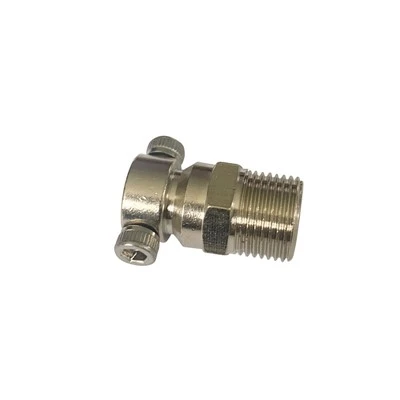
If you’re not sure which type of brass connector is right for your system—whether you need a standard fitting, a coated one to prevent galvanic corrosion, or lead-free for a food or medical application—hit us up. We’ve helped hundreds of pneumatic system owners pick the right parts, and we can walk you through specs, pressure ratings, and any questions you have. Don’t waste time guessing, get the right connector that’ll keep your air lines running smooth and save you money on leaks and replacements.
Misting Nozzles References
- Pneumatic Technology Association. (2022). Guide to Compressed Air System Components and Material Compatibility.
- Brass Industry Association. (2021). Properties and Applications of Brass for Industrial Fittings.
- Occupational Safety and Health Administration (OSHA). (2020). Compressed Air System Safety Standards for Industrial Facilities.
Zhuji Haihang Misting Equipment Co., Ltd.
Zhuji Haihang Misting Equipment Co., Ltd. is well-known as one of the leading brass connector manufacturers and suppliers in China. We warmly welcome you to buy high quality brass connector for sale here from our factory. For more information, contact us now.
Address: No.462 Zhongyang Rd., Diankou Town, Zhuji City, Zhejiang Province, China
E-mail: info@hmisting.com
WebSite: https://www.hmistingsystem.com/
