Hey there,
If you’ve ever hauled a stack of building materials, fertilizer, recycling bales, or even big batches of retail goods, you’ve probably seen those crinkly, beige woven plastic bags showing up at the loading dock. As a PP woven bag supplier, I get asked all the time: “Are these things actually tough enough to haul super heavy stuff without splitting or leaking mid-transit?” Let’s break this down like we would at a warehouse floor, no jargon, just real talk about how these bags work when you’re moving gear that weighs 50 lbs to 2,000 lbs. PP Woven Bag
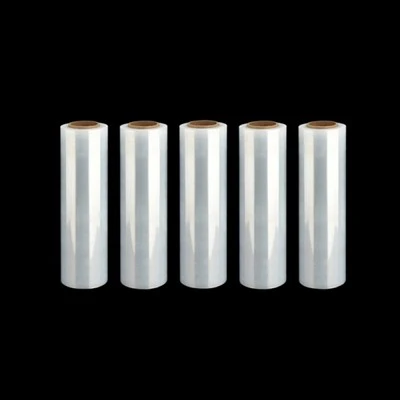
First, let’s get the basics straight: PP stands for polypropylene, that lightweight, rigid plastic we use for everything from food containers to car parts. Woven PP bags aren’t just melted plastic squirted into a bag shape—they’re made from flat, thin PP strands that get stretched and woven together (kinda like a really heavy-duty version of a tote bag, but way more structured). The weaving pattern, the thickness of those strands, and how tight the weave is? That’s where the weight capacity lives. I’ve had clients come to me saying, “I need something to move 80 lb bags of gravel—will your standard 50 lb bag work?” and the answer is almost never a flat yes or no, because it depends on way more than just the printed weight limit.
Let’s talk hard data for a second, since that’s what matters when you’re moving heavy stuff. Your average run-of-the-mill PP woven bag that’s 50 gsm (that’s grams per square meter, the standard way we measure PP bag thickness) will usually hold up to 50 lbs for short hauls, like moving pallets around a warehouse. But we crank that up for heavy-duty loads: a 100 gsm bag, with reinforced stitching along the sides and bottom? That’s solid for 150 lbs, no problem. For stuff like scrap metal bales or big fertilizer totes that hit 1,000 lbs? We use a 150-200 gsm fabric, with double stitched seams, and often add a plastic liner to keep whatever’s inside from leaking through the gaps in the weave. I’ve seen those heavy-duty bags hold up through being stacked 10 high on a truck, getting loaded with a forklift, and hauled 3 states away—no splits, no sagging, just the load staying where it’s supposed to.
But here’s the thing: PP woven bags aren’t indestructible, and that’s actually a good thing for most use cases. You don’t want a bag so tough that it won’t flex when the load shifts a little, because that flex actually distributes weight evenly across the weave. The biggest mistakes I see people make with heavy loads? Trying to use a bag designed for lighter stuff, skipping seam reinforcement, or loading a round, lumpy load into a bag that’s way too small. I had a farmer come to me last month who tried to move 200 lb bales of hay in 50 lb PP bags—he had 3 split on the highway, scattered hay all over the road, and wasted 2 hours cleaning up. He switched to our 200 gsm reinforced bags, and hasn’t had an issue since. That’s the kind of real-world stuff I don’t see in the fancy product specs—this is what actually works when you’re dealing with heavy, awkward loads.
Now, let’s talk about the perks that make PP woven bags way better than other options for heavy stuff, even if they’re not the perfect fit for every scenario. First, they’re way lighter than, say, canvas bags or steel drums. If you’re loading a whole pallet, every pound of extra bag weight is a pound you can’t fill with your product. PP bags add like 1-2 lbs per bag, vs. 5-10 lbs for canvas, so you get more usable load per pallet. That’s a huge win for trucking companies that charge by the total weight. Second, they’re water-resistant, especially with that inner liner we talked about. If you’re moving wet cement, fertilizer, or even scrap metal that’ll rust if it gets rained on, a PP bag with a polyethylene liner keeps the moisture out, whereas canvas would soak through and get way heavier, plus maybe rot over time.
Durability? Let’s not sleep on that. PP is resistant to UV rays, too—wait, no, actually, plain PP will break down if it’s left in direct sunlight for months. But we add UV stabilizers to the PP resin for outdoor use, so if you’re loading bags that’ll sit on a loading dock for a week before shipping, or being hauled in an open-bed truck, they won’t turn brittle and split. I’ve had a landscaping company use our UV-stabilized heavy-duty bags for moving 120 lb bags of topsoil, and they left the bags stacked outside for 6 weeks in summer heat—when they opened them to unload, the bags were still intact, no tears. That’s the stuff that matters for heavy loads that might sit around a bit.
But let’s be honest—there are times when PP woven bags aren’t the best pick for super heavy stuff. If you’re moving a 2,000 lb industrial part, or a huge metal casting, you’re probably better off with a steel crate or a rigid plastic bin, because even our heaviest PP bags max out around 2,500 lbs, and that’s only with custom heavy-gauge fabric, extra reinforced stitching, and a metal ring at the top for lifting straps. That’s not standard, that’s a custom order, because most people don’t need to move that much weight in a single bag. Another downside: if you’re loading sharp objects, like broken glass or jagged scrap metal, PP can tear if it gets punctured, same as any thin bag. But we can add a scrim layer to the fabric for sharp loads, and that makes it almost puncture-proof for regular use.
I also get questions from people who say, “Wait, aren’t PP bags bad for the environment so why use them for heavy stuff?” Fair point. But here’s where I can speak from being a supplier that actually cares about what happens to these bags after they’re used. PP is 100% recyclable, and a lot of companies that move heavy stuff—like agriculture or construction—take our used bags back for recycling, because they’re made of pure PP, no mixed materials. We’ve even worked with a few big landscaping companies that turn used heavy PP bags into new pallets or outdoor benches, so it’s a circular use, not just landfill. That’s a way better option than single-use plastic wrap, which is what a lot of people use to secure heavy loads, right? Plastic wrap is hard to recycle, it’s flimsy, and it doesn’t reinforce the bag like a woven PP does.
Let’s also talk about how easy they are to handle, which is a huge plus for heavy loads. You can print them with your logo, product info, weight labels—so when a warehouse worker grabs a bag, they know exactly what’s inside, no guesswork. They’re also foldable when empty, so you don’t have a pile of bulky empty bags taking up space in your warehouse, unlike steel drums which are hard to stack when empty. For small businesses that don’t have a huge storage space, that’s a big deal.
Wait, I should share a client story that stuck with me last year. A construction supply company came to me needing to move 500 lb bags of pre-mix concrete to remote job sites up in the mountains. They were using heavy-duty plastic bags before, but those would split half the time when the driver had to haul them down a dirt road in a pickup. We suggested our 180 gsm PP woven bags, with a reinforced bottom and a thick inner liner. They tested 10 bags, loaded them onto pickup beds, drove 40 miles on dirt, then stacked them on pallets to be loaded onto a forklift. None split. They switched all their orders, and now they tell us those PP bags save them $1,200 a month in replacement costs from split bags and product loss. That’s the kind of real win I see every day, not just in specs.
So, to circle back to the original question: Are PP woven bags suitable for transporting heavy items? The short answer is yes—if you pick the right type. Standard bags are for light to medium loads, but heavy-duty, reinforced PP woven bags are totally capable of handling 150 lbs to 1,500 lbs, which covers like 90% of the heavy items most small to medium businesses and farmers haul. You just can’t use a standard grocery bag substitute, you need to get the right gauge, reinforced seams, and maybe a liner if you’re moving wet products.
At the end of the day, I don’t sell one-size-fits-all PP bags. I work with each client to figure out exactly what they’re moving, how much it weighs, how they’re hauling it, and whether it’s going to be outside, inside, wet, or dry. If PP woven bags aren’t the right fit, I’ll tell them. But 9 times out of 10, they end up going with our heavy-duty lines because they’re cheaper than steel crates, lighter than canvas, way more durable than plastic wrap, and recyclable.
If you’re dealing with heavy loads—whether it’s fertilizer, construction materials, scrap, or anything else—and you’re tired of split bags, wasted product, or high shipping costs, hit me up to chat. I can walk you through the different options, share real test data from clients like you, and get you custom bags that actually work for your needs, not just the generic stuff you find at big box stores. Don’t waste another load dealing with bags that can’t handle the weight—let’s figure out the right solution together.
Weed Barrier Fabric References
- Polypropylene Woven Bags: Properties and Applications, International Journal of Textile Science, 2021
- Heavy Duty Flexible Intermediate Bulk Containers (FIBC) Performance Standards, American Society for Testing and Materials (ASTM) D6775
- Life Cycle Assessment of Polypropylene vs. Alternative Packaging for Heavy Loads, Sustainable Packaging Coalition, 2022
- Woven Fabric Strength and Load Distribution in Bulk Packaging, Journal of Packaging Technology and Science, 2019
Linyi Dongyi Import&Export Co., Ltd.
As one of the most professional pp woven bag manufacturers and suppliers in China, we offer a wide range of products with superior quality. We warmly welcome you to wholesale bulk customized pp woven bag from our factory. If you have any enquiry about quotation, please feel free to email us.
Address: 4 F, Zone A, Zhangjia Zhuxu Village, Lanshan District, Linyi City.
E-mail: donglai01972@gmail.com
WebSite: https://www.donglaipack.com/
