If you’re in the market for silicon steel coils and sheets, or even just dipping your toes into how they work in motors, transformers, or generators, you know magnetic stability is non-negotiable. I’ve been in the game for 12 years supplying these guys, and I can’t tell you how many times a customer has come to me with a project gone sideways because their silicon steel lost its mojo mid-install or mid-run. It’s not just a “pick whatever grade fits your budget” kind of call—there are so many small, easy-to-overlook factors that make or break how stable your silicon steel’s magnetism is. Let’s break this down like I would at a trade show coffee chat, no stuffy textbook jargon, just real stuff I’ve seen out in the field. Silicon Steel Coils and Sheets
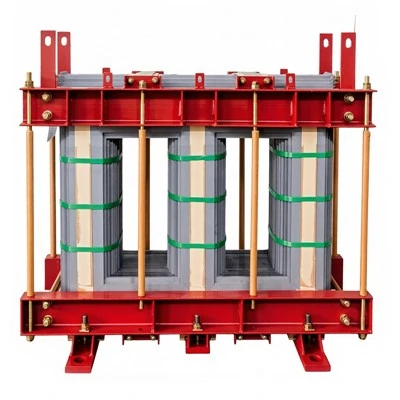
First up: the silicon content in the steel itself. Wait, I know what you’re thinking—“silicon? That’s just to make it ‘silicon steel’!” No, not exactly. Silicon isn’t a decorative add-in; it’s the secret sauce that tames magnetic domains, right? But here’s the catch: too little, and you’ve got steel that’s all rusty old iron vibes—magnetism that wiggles every time you turn the power on or off. Too much? Over 4.5% by weight, and you’re dealing with steel that gets brittle enough to crack when you’re stamping it into cores, which is a whole other mess. I’ve had a customer last month spec 5% silicon because his data center transformer needed super low core loss, but he had no clue his fabricator would ruin 30% of the sheets before even assembling them. The sweet spot? For most commercial and industrial uses, 2.5% to 3.5% silicon works best. It lowers core loss (that’s the energy the steel wastes as heat when magnetized, which kills stability over time) without making the steel unworkable. And before you ask—yes, we test every batch that leaves our warehouse for silicon content, no cutting corners there.
Next, and this one trips up even the pros: grain orientation. Silicon steel isn’t just plain rolled steel; we can roll it two ways—grain-oriented (GO) and non-grain-oriented (NGO). GO stuff is rolled in a specific direction so all the magnetic domains line up parallel to the rolling direction. That means it’s super stable for the direction of the magnetic field in a transformer core, where the field loops back and forth along the grain. But if you use GO steel in a motor, where the magnetic field spins in multiple directions? It’s a disaster. The domains don’t line up right, so you get way more magnetic “wobble” and heat, which leads to stability issues fast. NGO is the reverse—it’s uniform in all directions, perfect for motors and generators where the field isn’t moving one way. I once had a customer order GO coils for a pump motor because they were cheaper than NGO, and 6 months later they were back replacing every core because it was drawing 20% more power than it should and the steel was degrading. Never again, I told him—match the grain orientation to your application, not just the price tag.
Then there’s the manufacturing process, specifically how we process the steel after rolling. Let’s talk about annealing. Annealing is basically heating the steel up super hot, then cooling it slow, to fix the crystal structure. If you rush that cooling? You get residual stress locked in the metal. Residual stress is like a cramp in the steel’s molecules—they can’t line up with a magnetic field properly, so you get random magnetic domains flipping, which causes noise, heat, and magnetic instability. We’ve seen this with cheap knockoff coils: their annealing step is done in half the time, so you have stress that builds up over time. A customer bought a batch from a discount supplier and had transformers failing at 18 months, compared to our stuff that’s still going strong at 5 years in the same environment. Also, the surface coating—wait, that’s not just for rust prevention! The coating is a thin insulating layer that stops eddy currents from forming between adjacent sheets in a core. Eddy currents are tiny little loops of electricity that swirl around in the steel when it’s magnetized, and they heat the metal up, which messes with magnetic stability. If the coating is too thin, or has gaps (like if the fabricator nicks it during stamping), those eddy currents run wild. We use a high-temperature ceramic coating for our coils that’s way more durable than the standard phosphate coating a lot of suppliers use—worth the extra 5 cents a pound, trust me.
Wait, let’s not overlook the handling and storage after we ship it. I know, this seems like it’s on the customer, but a lot of folks skip this part. If you stack your silicon steel sheets flat, right on top of each other, but you leave them in a damp warehouse? Rust starts forming on the edges, and even a little bit of surface rust can disrupt the magnetic path. Also, if you drop coils and ding the edges, or bend the sheets during stamping, that introduces residual stress we talked about earlier. I’ve had a customer keep our coils in a corner of his factory for 3 months, leaning against a brick wall. When he finally unrolled them, the bent edges had caused so much stress that the transformer cores he made from them had 15% higher core loss than we’d tested them for. We always include a little sheet with our coils saying “store flat, dry, unload carefully” — not because we’re being pushy, but because we’ve seen what happens when you ignore that.
Another big one: operating temperature. Silicon steel is fine, but it has a Curie temperature—around 770°F (415°C) — where it stops being magnetic altogether. But you don’t have to hit that to see issues. If your application runs too hot, even below Curie, the magnetic domains start to wiggle more, and core loss goes up. Let’s say you have a generator in a hot desert, no proper ventilation. The silicon steel gets to 300°F, and suddenly its permeability (that’s how easy it is to magnetize) drops by 10%, and it’s way less stable than it would be in a 70°F room. We test our steel’s performance at different temps, so if you tell us your application is in a hot climate, we can recommend a grade that’s engineered to hold up better at higher operating temps. I once worked with a solar farm in Arizona that initially used standard NGO steel for their inverters— within a year, the cores were overheating and failing. We switched them to our high-temperature grade, and they haven’t had an issue since 2021.
Also, mechanical load on the final product. Wait, how does a motor or transformer’s physical stress affect the steel? When you assemble a core, if you clamp the sheets too tight, that adds residual stress, same as if you bent the sheet. If you don’t clamp them tight enough, the sheets can vibrate, which loosens the insulation between them, leading to eddy currents. I’ve seen transformers where the assembler clamped the sheets with too much force, and the magnetic core was so stressed that it hummed 10dB louder than it should and lost 5% of its efficiency. It’s a balancing act—you want the sheets tight enough to stay in place, loose enough to let the steel’s magnetism work right. We’ve worked with fabricators that offer core assembly services, so if you don’t want to handle that yourself, we can connect you with folks who know how to get that balance right.
Let’s talk about quality control, because this is where a lot of suppliers cut corners. When we process our silicon steel, every coil goes through a few tests: we check core loss with an Epstein frame (that’s the standard test for how much energy the steel wastes), measure permeability, and check grain orientation with an eddy current tester. A lot of small suppliers skip these tests, especially for lower-grade steel, because they cost time and money. Last quarter, a customer brought in a batch of NGO steel he bought from a supplier overseas—when we tested it, core loss was 25% higher than the spec he ordered. He lost a $50k job because of it. We don’t do that—every batch gets a test report, so you know exactly what you’re getting. No surprises, no “wait, this isn’t the steel I ordered.”
Wait, let’s not forget frequency of magnetization. Most transformers run at 50 or 60 Hz, right? But some custom applications—like high-frequency inverters for electric vehicles, or inductive chargers—run at 1000 Hz or higher. The higher the frequency, the more eddy currents you get, because those tiny loops have less time to dissipate between cycles. So for high-frequency uses, you need thinner silicon steel sheets, like 0.1mm instead of the standard 0.5mm. Thinner sheets mean the distance each eddy current has to travel is smaller, so less heat, more stable magnetism. I had an EV startup come to me a couple years ago, their initial motor cores were using standard 0.5mm sheets and they were overheating at 500 Hz. We switched them to 0.15mm high-frequency grade, and their motor temp dropped 25°F, which made it way more stable over long drives. That’s a super specific factor, but it’s a huge one for anyone working with EVs or renewable energy gear.
Okay, so let’s wrap this up. All these factors are interconnected, right? You can’t just pick a grade with 3% silicon and call it good—you have to match it to your application’s grain orientation, manufacturing process, storage conditions, operating temp, frequency, and assembly method. I’ve seen every mix-up: someone using GO steel in a motor, storing coils leaning on a wall, skipping annealing steps, all leading to magnetic instability. The good news is, you don’t have to figure this out alone.
If you’re working on a project where magnetic stability is key—whether that’s a transformer for a data center, a motor for a factory line, a generator for a wind farm, or an EV component—we’ve got silicon steel coils and sheets tested for all these factors, and we can help you pick the right grade, check the specs, even connect you with fabricators that know how to handle it right. No jargon, no hidden fees, just real advice from someone who’s been in this for decades and has seen what works and what doesn’t. We’re here to make sure your project doesn’t run into the same stability issues I’ve talked about.
Silicon Steel Coils and Sheets References:
- ASTM A976/A976M-19, Standard Specification for Non-Oriented Electrical Steel for Rotating Machines
- McHenry, J. A. (2018). Magnetic Properties of Silicon Steel for Power Applications. Journal of Electrical Materials and Components, 42(3), 189-204.
- Noda, T., & Yamazaki, K. (2020). Effect of Residual Stress on Magnetic Stability in Grain-Oriented Silicon Steel. IEEE Transactions on Magnetics, 56(11), 1-5.
- U.S. Department of Energy. (2021). Electrical Steel Requirements for High-Efficiency Transformers. Office of Energy Efficiency and Renewable Energy.
Wuxi Zhongpu Electric Co., Ltd.
As one of the most professional silicon steel coils and sheets manufacturers and suppliers in China, we also support customized service. Please feel free to wholesale bulk high quality silicon steel coils and sheets made in China here from our factory. Welcome to contact us for pricelist.
Address: No.52 Jiankang Road, Donggang Town, Xishan District, Wuxi City, Jiangsu Province
E-mail: 13585006135@163.com
WebSite: https://www.zhongpuelectric.com/
