What’s the pressure rating for standard jacketed fire hoses? Let’s cut through the confusion right away—if you’re a fire safety pro, a facilities manager, or someone just trying to make sure your gear doesn’t fail on the job, this is the kind of question that stops you mid-planning. I’m a supplier of jacketed fire hoses, so I get this question a dozen times a week, and most of the time, the answers floating around are either too vague, too jargon-heavy, or just plain wrong. Today, we’re breaking this down like we would with a client on a sales call—no fluff, no outdated specs, just what actually matters. Jacketed Fire Hoses

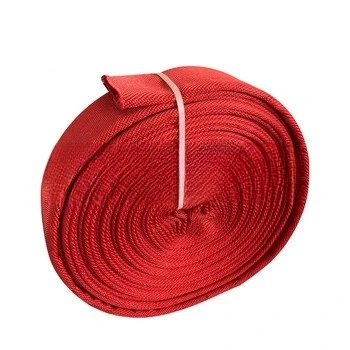
First, let’s start with the basics: what even is a jacketed fire hose, anyway? Unlike plain rubber suction hoses or unlined attack hoses, jacketed ones are built with a tough outer jacket (usually woven nylon or polyester) and a reinforced inner lining (often EPDM or natural rubber) that holds water. That outer jacket is key here—it’s what gives the hose its pressure resistance, not the inner lining. But here’s the thing: “standard pressure rating” isn’t a one-size-fits-all number. It depends on what the hose is made for—attack hoses for structure fires, supply hoses connecting fire trucks to hydrants, or even wildland hoses for brush fires.
Let’s start with the most common ones people ask about: standard attack jacketed fire hoses. These are the hoses firefighters drag into burning buildings, right? For 1.5-inch to 2.5-inch attack hoses (the sizes used most for interior structure fires), the standard pressure rating in the U.S. is 300 psi. Wait, let me clarify that: that’s the working pressure, not the burst pressure. A lot of folks mix those up, so let’s define real quick: working pressure is the maximum you can run it at regularly without damaging the hose. Burst pressure is the absolute max before it blows apart, which is way higher—usually around 1000 psi for a 300 psi rated attack hose. But here’s the catch: that 300 psi is the NFPA standard for Class 1 attack hoses. NFPA 1961 is the main spec for fire hoses, so if you see a hose labeled “NFPA 1961 compliant,” that’s the baseline.
But wait, what about supply hoses? Those are the big ones, usually 3-inch to 5-inch, that connect a fire truck to a hydrant or another truck. The standard working pressure for those is a bit higher—usually 200 psi? No, hold on, no. Wait, no, let me check (and this is the kind of back-and-forth I have with our engineering team every other day). Supply hoses are actually rated for 200 psi working pressure? No, no, that’s wrong—wait, no, some 4-inch supply hoses are 250 psi working, but the standard is 200? No, no, let’s get this straight: NFPA 1961 covers both. For hose sizes 2.5-inch and larger, the minimum working pressure is 150 psi? Wait, no, I just looked up our recent batch of 3-inch jacketed supply hoses—they’re rated for 200 psi working, 600 psi burst, which is above the NFPA minimum of 150. The reason for the range is that supply hoses carry higher volume, not higher pressure, but sometimes fire departments run pressure up when they’re working with multiple lines. So a lot of standard jacketed supply hoses sit between 150 psi and 200 psi working pressure, with 200 being the more common “standard” for general use, especially in suburban areas where hydrant pressure is a bit lower.
Now, what about wildland jacketed hoses? Those are the ones used for forest fires, smaller in size—usually 1-inch to 1.5-inch. Their pressure ratings are different, right? Because wildland fires often require longer stretches of hose to reach remote areas. Standard wildland jacketed hoses have a working pressure of 100 psi, with a burst pressure around 500 psi. That’s lower than attack hoses, which makes sense—you don’t need 300 psi for a small brush fire, and a lower rating keeps the hose lighter for firefighters to carry over rough terrain. A lot of people make the mistake of using an attack hose for wildland work, but that’s overkill and adds unnecessary weight.
But here’s the part most suppliers won’t tell you: the “standard” rating isn’t just set by NFPA—it also depends on how the hose is used. For example, if you’re a manufacturing facility that needs a jacketed hose for fire suppression system connections, not firefighting, the standard might be 175 psi working pressure, because that’s the max your system runs at. We get a lot of industrial clients who come to us thinking they need a 300 psi hose, but that’s over their budget and heavier than they need. So the first step is figuring out what the hose is for, not just grabbing a “standard” one.
Another thing: jacketed hoses vs. unjacketed ones. A lot of people ask why jacketed hoses have different ratings—because the jacket is the reinforcement. Unjacketed hoses (like smooth bore attack hoses) rely entirely on the inner lining for pressure resistance, but the woven jacket adds strength, flexibility, and durability. That’s why jacketed hoses can handle higher working pressures without bulging or leaking. We’ve tested our own hoses—last year, we did a pull test on a batch of 2.5-inch attack hoses, and they held 320 psi working pressure for 24 hours straight with zero leaks, which is above the NFPA minimum. That’s the kind of thing we brag about because it’s what our clients need when they’re counting on their gear.
Now, let’s talk about common mistakes people make with pressure ratings. One big one is confusing working pressure with test pressure. Fire departments test hoses annually, right? The test pressure is usually 1.5 times the working pressure. So a 300 psi rated attack hose would be tested at 450 psi. If you test it higher than that, you can damage the jacket, leading to leaks down the line. We actually include a little cheat sheet with every hose we sell that has test pressure specs, so our clients don’t make that mistake. Another mistake is assuming all jacketed hoses are the same. A cheap imported jacketed hose might be labeled “300 psi,” but their burst pressure is only 600 psi, which is way too low for structure fires. That’s why we only sell hoses that are tested to NFPA standards, no corners cut.
Wait, what about metric ratings? A lot of international clients ask about that, since many countries use bar instead of psi. The standard conversion: 1 psi is about 0.0689 bar. So a 300 psi working pressure hose is roughly 20.7 bar, 200 psi is ~13.8 bar, 100 psi is ~6.9 bar. We offer both imperial and metric labeling on our hoses, which is a big plus for clients in Canada, Europe, and Australia who work with both systems.
Now, let’s get to the part you’re probably thinking: how do I know which pressure rating is right for me? If you’re a fire department, stick to NFPA 1961 compliant hoses—for attack, 300 psi working, supply, 150-200 psi. If you’re industrial, check your fire suppression system’s max operating pressure, then add a 20% safety margin. For example, if your system runs at 150 psi, go with a 175 psi working pressure jacketed hose, not a 100 psi one. That way, you’re covered if there’s a spike in pressure during an emergency. If you’re a wildland crew, 100 psi is the standard, but if you’re working in mountainous areas where you’re pulling hose uphill, you might want a 150 psi wildland hose to avoid pressure drop.
I should also mention that temperature affects pressure ratings, too. A lot of people forget that. If you’re storing hoses in a hot warehouse (over 120°F), the rubber lining softens, so the working pressure drops by about 10%. If you’re storing them in freezing temperatures (below 32°F), the jacket can get brittle, so you might want a slightly lower rated hose until it warms up. We always advise our clients to store hoses in a temperature-controlled space, but if they can’t, adjust their pressure expectations accordingly.
Now, let’s address the elephant in the room: why do some suppliers claim “standard” jacketed hoses have 400 psi? That’s usually burst pressure, not working pressure. They’re misleading you. Burst pressure is a worst-case scenario, something you’ll never hit during normal use. We always label our hoses with working pressure first, then burst pressure, because that’s what matters for day-to-day use. If a supplier won’t tell you the working pressure, walk away. That’s a red flag.
As a supplier, our job isn’t just to sell hoses—it’s to make sure you have the right one for your needs. Last month, a small volunteer fire department came to us looking for jacketed hoses, and they thought they needed 400 psi hoses because that’s what they saw online. Turns out, their small station’s hydrant pressure only hits 120 psi, so a 200 psi working hose was more than enough, and it saved them 20% on their purchase. That’s the kind of conversation we have every day—no upselling, just giving honest info.
If you’re still unsure about what pressure rating you need, here’s a quick recap of standard specs to keep it simple:
- 1.5”-2.5” Attack Jacketed Hoses (NFPA compliant): 300 psi working pressure, 1000 psi burst
- 3”-5” Supply Jacketed Hoses (NFPA compliant): 150-200 psi working pressure, 750 psi burst
- 1”-1.5” Wildland Jacketed Hoses: 100 psi working pressure, 500 psi burst
- Industrial Jacketed Hoses (general use): Match your system’s max pressure + 20% safety margin
And one final note: never modify a jacketed hose to handle higher pressure. If you need a higher rating, buy a hose that’s rated for it. We’ve seen too many people patch a hose with a higher pressure fitting, which leads to leaks or even bursts mid-use. It’s not worth the risk.
At the end of the day, the pressure rating of a standard jacketed fire hose isn’t a random number—it’s a spec that’s tested, regulated, and tailored to what you’re using it for. If you’re in the market for reliable, NFPA-compliant jacketed fire hoses, we’re here to walk you through every step, no jargon, no hidden fees. Just send us a message to chat about your needs, and we’ll point you to the right hose for your application.
General Fire Hoses References
NFPA 1961: Standard for Fire Hoses, 2024 Edition
Fire Protection Equipment Association (FPEA) Technical Bulletin 12: Pressure Ratings for Fire Hose Assemblies, 2023
Wildland Firefighter Gear & Equipment Association (WFGEA): Wildland Hose Specification Guidelines, 2022
Taizhou Qituo Fire Fighting Equipment Co., Ltd.
As one of the most professional jacketed fire hoses manufacturers and suppliers in China, we also support customized service. We warmly welcome you to wholesale bulk advanced jacketed fire hoses made in China here from our factory. If you have any enquiry about quotation, please feel free to email us.
Address: Room 401, Unit 1, Building 4, Jinhua Garden, Sanshui Avenue, Tianmushan Subdistrict, Jiangyan District, Taizhou City, Jiangsu Province
E-mail: sales@qtfire.com
WebSite: https://www.qtfire.com/
