If you’ve ever worked with CNC-machined parts—whether in aerospace, automotive, medical devices, or heavy industrial equipment—you know that threads are far from just random grooves cut into metal or plastic. They’re the unsung heroes holding assemblies together, and choosing the wrong thread type can lead to catastrophic failure, costly delays, or product recalls. As someone who’s spent the last 12 years as a CNC threaded components supplier, I’ve lost count of how many times I’ve seen clients come to us confused about imperial threads, specifically why they behave differently than the metric threads they might be more familiar with. Today, I want to break down the key characteristics of imperial threads in CNC components—stuff we actually deal with on the shop floor, not just textbook jargon—and why those traits matter for your next project. CNC Threaded Components
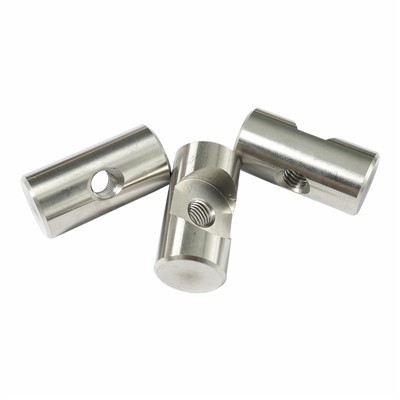
First, let’s get the basics straight, because “imperial thread” isn’t a one-size-fits-all term. Unlike metric, which is a standardized global system with a fixed pitch measured in millimeters, imperial threads are based on the British Imperial System, with dimensions in inches, and two major sub-types that we machine every single day: Unified National Coarse (UNC) and Unified National Fine (UNF). Wait, there are also threads like National Pipe Thread (NPT) for fluid handling, but for general threaded components, UNC and UNF are the workhorses. The first defining characteristic of imperial threads is their pitch counting method: instead of millimeters between adjacent threads, it’s threads per inch (TPI). So a 1/4”-20 UNC thread means the nominal outer diameter is 1/4 of an inch, and there are 20 threads packed into every linear inch along the axis. That sounds simple, but it’s a huge difference from metric, where M6 x 1.0 means 1mm of pitch. The TPI system is why imperial threads can feel more coarse or fine than metric equivalents at a glance, but that’s not just a convenience—it’s baked into their design for specific load and fit requirements.
Next, fit classes, which are non-negotiable when we set up our CNC mills and lathes. Imperial threads use a unique labeling system for how tightly or loosely two threads engage, and this is something I’ve had to explain to engineers more times than I can count. The most common fit for our standard CNC components is 2A external and 2B internal. Let me translate that: the “A” stands for external threads (the ones on bolts or screws) and “B” is internal (the ones in holes or nuts). The number “2” is a medium fit—enough clearance to allow for easy assembly even if there’s a bit of tool wear or minor dimensional variation in raw material, which is critical in high-volume production. If you need a tighter fit, you go to class 3, which is zero clearance, used for high-stress or vibration-heavy applications like aircraft landing gear parts. For really loose fits, like a quick-disconnect hose fitting, we might use class 1. The big mistake new clients make is mixing imperial fit classes up—asking for a 2B internal thread when they really need a 3A external bolt. On our CNC equipment, we program different tool paths and depth offsets based on that fit class, because even a 0.001” error in thread depth can make a part either impossible to assemble or too loose. That’s why our team runs a test thread on every new job first; it’s a step we never skip, even when the blueprint looks straightforward.
Another key characteristic is their thread angle. Both imperial and metric use a 60-degree thread angle, right? Wait, hold on—wait, no, that’s a common myth! Unified imperial threads (UNC/UNF) do use the same 60-degree flank angle as ISO metric, but that’s where the similarity ends for most general-purpose threads. Wait, but the pipe threads—NPT—use a 60-degree angle too, but they’re tapered, which is a whole other story. No, the thing that sets imperial UNC/UNF apart from metric isn’t the angle, it’s the crest and root clearance. Imperial threads have a rounded or flat crest and root, but the allowable variation for those is standardized to imperial units, not metric. For example, the root of a UNC thread can be no sharper than a certain fraction of an inch, because a sharp root would create stress concentrations that cause the part to crack under load. On our CNC shop floor, we use custom thread gauges to check this—metric gauges won’t work here, because their calibration is in millimeters, not inches. I once had a client send us a blueprint with metric thread gauges specified for a UNC part, and we had to clarify that right away; using the wrong gauges would have resulted in parts that failed inspection 100% of the time. That’s a small detail, but it’s one of the most important when machining imperial threads.
Then there’s the nominal diameter nuance, which trips up even experienced engineers. Imperial thread nominal diameter is often not the exact outer diameter of the thread. For example, a 1/4”-20 UNC bolt has a nominal diameter of 1/4 inch, but the actual outer diameter of the machined thread will be slightly less than that—around 0.246 inches for a class 2A fit. Wait, why? Because the fit class requires clearance between external and internal threads. If the bolt’s outer diameter was exactly 1/4 inch, it would be too tight to screw into a standard 1/4”-20 UNC nut. That’s a critical point for our CNC programming: we have to offset our tool path by a tiny, measured amount to get that exact diameter right. For metric threads, the nominal diameter is almost the actual outer diameter of the thread, so it’s a simple direct measurement. That’s why many machinists who only work with metric take a while to adjust when switching to imperial—there’s no direct 1:1 correspondence between blueprint nominal size and actual machined part size.
Now, let’s talk about how these characteristics play out in real-world CNC production, because that’s what you care about when you order parts from a supplier like me. Imperial threads are often preferred for high-volume automotive and heavy equipment parts because their coarse pitch (for UNC) makes them easier to assemble manually or with power tools, and they can handle higher torque loads without stripping, compared to equivalent metric coarse threads. Wait, is that always true? No—fine-pitch UNF threads, for example, are used in applications where you need more threads per inch in a smaller space, like aerospace fasteners for aircraft interior panels, where weight is a premium. The TPI count for UNF threads is higher than UNC for the same nominal diameter: a 1/4”-28 UNF is finer than a 1/4”-20 UNC. That’s why UNF threads have more shear surface, so they can handle vibration better, which is why we machine so many UNF parts for medical devices like surgical tools, where a loose thread could be life-threatening.
One thing we’ve learned over the years as a supplier is that imperial threads have a longer historical standardization, which means there’s a massive library of existing tools, gauges, and replacement parts that are compatible. If a client needs a replacement part for an older piece of heavy machinery, odds are it uses imperial threads, and we can machine exact replacements without having to retool the entire production line. For metric threads, standardization is more global, but older US-made equipment often relies on imperial, so that’s a huge advantage for clients repairing legacy systems.
But there are challenges too, which is why we prioritize precision when machining imperial threads. Because their dimensions are in fractional inches, the tolerance for error in thousandths of an inch (that’s why we use “thou” in the shop, not millimeters) is much smaller than many new engineers realize. A CNC lathe needs to have sub-thou accuracy to machine a class 3A external thread correctly—if our machine is off by just 0.002 inches, the part will either be too tight to turn or so loose it will back out under load. That’s why we invest in regular calibration of our CNC equipment, and why every batch of threaded parts we make goes through a 100% inspection of critical thread dimensions, not just a random sample. We’ve turned away jobs where clients demanded out-of-spec tolerance for imperial threads, because we know from experience that cutting corners here leads to parts that end up failing in the field, which damages our reputation and theirs.
Another common mistake we see is mixing up thread types. For example, a client might order a UNC external thread when they need UNF, or an NPT pipe thread when they need a general-purpose UNF. NPT threads are tapered, which means they don’t use a straight nominal diameter—they get wider along their length, which is perfect for sealing fluid or gas, but terrible for a bolt that needs to stay tight. We’ve had clients try to use NPT threads for load-bearing applications, and those parts would have failed immediately. So part of our job as a CNC threaded components supplier isn’t just to machine the threads to your blueprint—it’s to advise you on which imperial thread type, fit, and pitch will work best for your application, based on years of experience across different industries.
Let me give you an example from last year, to make this concrete. A client in the agricultural equipment space came to us needing 5000 custom bolts for their new tractor hitch. They initially sent a blueprint calling for 3/8”-16 UNC bolts, class 2A. But after we reviewed their specs, we noticed their hitch is exposed to constant vibration from rough field use, and a UNC thread would have been too coarse to resist loosening over time. We suggested switching to 3/8”-24 UNF, still class 2A, because the finer pitch creates more contact area between the bolt and nut, reducing vibration loosening. We also adjusted the tool path slightly to ensure the crest and root dimensions matched the UNF standard, instead of the UNC standard they’d specified. When they tested the first batch, they found that the UNF bolts held up 30% better than their previous design, and they’ve re-ordered the part three times since then. That’s the value of working with a supplier who doesn’t just follow blueprints, but understands the characteristics of the threads they’re machining.
Now, if you’re wondering why all this matters for your business, it boils down to performance, cost, and reliability. Imperial threads’ characteristics—TPI measurement, 2A/2B fit classes, nominal diameter nuance, and standardized TPI for different applications—mean that when you specify an imperial thread, you’re not just picking a size, you’re choosing a set of engineered properties: how easy the part is to assemble, how much load it can handle, how it resists vibration, and how compatible it is with existing parts. Get these right, and your assemblies will be stronger, last longer, and have fewer warranty claims. Get them wrong, and you could be looking at field failures, production delays, or even safety issues.
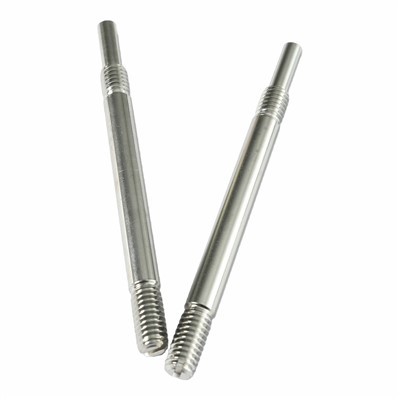
If you’re working on a project that requires CNC-machined imperial threaded components, whether it’s a new aerospace part, a medical device, agricultural equipment, or any other application, I can help. Our team has the experience, calibrated equipment, and quality processes to machine imperial threads to exact specifications, with the precision you need to meet your performance goals. Reach out to our team to discuss your requirements, share your blueprints, or ask any questions you have about imperial threads or CNC machining in general. We’re here to help you get the right parts, on time, every time.
CNC Turning References
- Machinery’s Handbook: A Reference Book for the Mechanical Engineer, Designer, Manufacturing Engineer, Draftsman, Toolmaker, and Machinist. Industrial Press, 2020.
- Unified Thread Standard (UTS) – ANSI/ASME B1.1-2019. American National Standards Institute, 2019.
- CNC Turning and Milling: Operations, Programming, and Simulation. Industrial Press, 2021.
- Threaded Fasteners: Properties and Applications. ASTM International, 2022.
Huizhou Quanyi Precision Hardware Products Co., Ltd.
Address: Building A10, 7th Floor, Zhongchuangyingke 5G Industrial Park, Zhonghan Industrial Park, Tonghu Town, Huizhou City
E-mail: info@qycncturning.com
WebSite: https://www.qycncturning.com/
