Hey everyone, Off-Grid Solar Power System

If you’ve ever spent time off-grid—like camping for a week, or maybe staying at a remote cabin with no grid access at all—you know how crucial power is these days. No phone to call for help after a storm, no way to keep food cold, no lights when the sun goes down. That’s where off-grid solar systems come in. As a guy who’s been selling these setups for years (I’m not here to just push boxes, I’ve helped folks install everything from small cabin kits to big farm systems), I want to break down exactly what makes these things work. No jargon, no fancy fluff—just real, plain talk about each component, what it does, and why you can’t skip any of ’em.
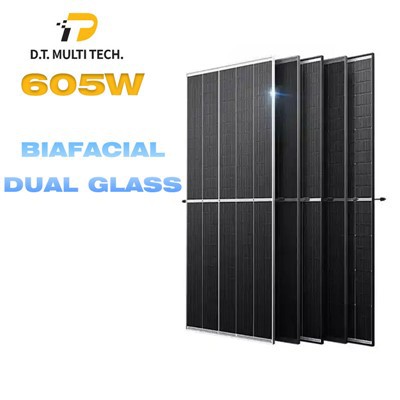
Let’s start with the big one everyone knows: the solar panels. Wait, but hold on—it’s not just any panel. Most off-grid folks use monocrystalline panels these days, right? Why? They’re way more efficient than the older polycrystalline ones, especially when the sun’s not super bright—like a cloudy day or late in the season. I once sold a system to a guy in northern Maine who thought a $100 Amazon panel would work for his moose-hunting cabin. Nope, after two cloudy weeks, his batteries were dead. Monocrystalline panels have that single silicon crystal structure, so they convert more sunlight to electricity even in less-than-perfect conditions. Size matters too—if you’re powering a tiny fridge and a few lights, you don’t need 20 panels. If you’re running a well pump and a full-size fridge, you’ll need more, and you’ll want to mount them at the right angle for your latitude (we always adjust that for customers—no one wants to waste 20% of their power because panels are pointed the wrong way). Pro tip: get panels with a good warranty—25 years for output is standard, and we only stock brands that actually honor that, not the ones that vanish after a year.
Next up is the charge controller. This is the unsung hero of the whole system, and so many new buyers skip picking the right one. Here’s the thing: solar panels pump out DC (direct current) electricity, but if you send that straight to your batteries, you’ll overcharge ’em and kill ’em way faster than you should. The charge controller’s job is to regulate that flow—stop sending power once batteries are full, make sure the voltage is stable, and even prevent reverse current at night (when panels don’t make power, you don’t want batteries draining back through the panels). There are two main types: PWM and MPPT. PWM is cheaper, works okay for small, simple setups—like a weekend camper with a 100Ah battery. But MPPT is a game-changer for bigger systems. It can adjust to the panel’s voltage to capture up to 30% more power, especially if you have panels wired in series. I recommend MPPT 9 times out of 10, even for medium cabins—$100 extra now saves you thousands in battery replacements later. Last year, I helped a customer who bought a PWM controller for his 12-panel system; his batteries only lasted 2 years, vs. the 5-year lifespan he should’ve gotten with MPPT. Don’t make that mistake.
Now the heart of the system: the batteries. This is where all the power you collect during the day gets stored for when the sun’s not shining—nighttime, cloudy days, even a whole week of rain. Not all batteries are created equal for off-grid use. Car batteries? Terrible. They’re built for short bursts of power, not deep discharges (you can’t drain them more than 50% without ruining them). Off-grid-specific batteries are deep-cycle, and two types dominate these days: lead-acid and lithium-ion. Lead-acid is cheaper upfront—flooded, sealed AGM, or gel. Flooded is the cheapest, but they need maintenance (toping up with distilled water, good ventilation). AGM and gel are sealed, no maintenance, safe for indoors, but still have a shorter lifespan and lower energy density than lithium. Lithium is pricier at first, but they last 10+ years, let you discharge them up to 80% without damage, and are way lighter. I had a customer with a 4-panel cabin system on lithium that only needed 1 charge cycle adjustment in 6 years, vs. a previous customer with lead-acid who had to replace batteries every 3 years. Also, battery size is all about your load. If you use 5kWh of power a day (fridge, lights, laptop, phone), you need enough battery to cover that—we calculate that for every customer, so they don’t buy a battery that’s too small and end up using candles at night. One mistake I see all the time: people size their panels right, but skimp on batteries, thinking “I can just charge more during the day.” Nope—if you use more than the panels can make that day, you need stored power.
Wait, what about the inverter? Because here’s the thing: most of your home stuff—your fridge, TV, phone charger, coffee maker—uses AC (alternating current), not DC from panels or batteries. The inverter is the middleman that converts DC to AC. Again, not all inverters are the same. Off-grid inverters are different from grid-tie ones—grid-tie is designed to send excess power back to the grid, but off-grid has to handle all the power alone, so they need to be pure sine wave. Cheaper modified sine wave inverters can make your fridge hum, fry sensitive electronics, or even cause damage over time. Pure sine wave is the only way to go. Size is key too—you need an inverter that can handle your biggest load, like a well pump or electric heater, which uses more power when it first starts (called startup surge). If your well pump is 1000W, you don’t want a 1000W inverter—get a 1500W or 2000W one to handle that surge. I once had a customer with a 1000W inverter trying to run a 1200W well pump; every time it kicked on, the inverter tripped. We swapped it for a 2000W pure sine wave, and no problems since. Also, some inverters have built-in charge controllers now, but I still recommend separate ones for bigger systems—more flexibility, easier to upgrade later.
Then there’s the balance of system (BOS) components—stuff that’s easy to overlook but makes everything work together. First, wiring. You can’t use regular extension cords from the hardware store for solar—solar needs thick, weather-resistant wire (we use UL-listed wire rated for outdoor use, not the thin stuff). Wrong wire size causes power loss and even overheating, which is a fire hazard. Then there’s mounting hardware: racks for the panels, either roof-mounted, ground-mounted, or pole-mounted. Ground-mounted is easier to adjust the angle later, roof-mounted is cleaner, but you need to make sure your roof can hold the weight (especially with snow). We offer mounting kits tailored to different roof types—shingle, metal, whatever. Batteries need a secure enclosure too, away from extreme heat or cold—batteries don’t like being in a hot attic or a freezing garage, so we sell insulated enclosures to keep ’em at a steady 70-80°F. Also, disconnect switches—important for safety when you’re installing or maintaining the system, so you don’t accidentally get shocked. Oh, and fuses and circuit breakers—they protect your panels, inverter, and batteries from short circuits, no one wants their whole system to go up in smoke because of a loose wire.
Wait, should I mention something I learned the hard way? A few years back, I installed a system for a guy who skipped a few BOS steps. He put his batteries in an uninsulated shed in Texas—summer temps hit 110°F in there. His lithium batteries only lasted 4 years, when they should’ve lasted 10. Because high temps kill battery life. That’s why those enclosures matter, and why we always tell customers where to place everything—shaded, well-ventilated, not too hot or cold.
Oh, and what about backup? Wait, no, that’s not a component, but maybe mention that if you want extra reliability, you can add a generator as a backup for super cloudy weeks, but that’s optional. The core system is the panels, charge controller, batteries, inverter, and BOS.
Let me wrap this up. The big takeaway is that every component is linked—skimp on the charge controller, kill your batteries; skimp on the inverter, damage your stuff; skimp on wiring, cause a fire. This isn’t just a bunch of parts thrown together, it’s a system, and each piece has to be matched to your specific needs. A 1-panel system for a weekend camper is totally different from a 20-panel system for a small farm, and we work with every customer to size everything right, so they don’t waste money on extra stuff or end up with a system that can’t keep their fridge running.
If you’re thinking about going off-grid, or you have a system that’s not working as well as it should, hit us up to chat. We don’t push overpriced kits that are too big for your needs, we help you build something that fits your lifestyle, whether that’s a tiny cabin in the woods or a remote homestead. No salesy hype, just real advice from someone who’s installed hundreds of these systems and dealt with all the mistakes.
Solar Mounting References:
- National Renewable Energy Laboratory (NREL). "Off-Grid Solar Systems: Design and Installation Guidelines". 2022.
- International Electrotechnical Commission (IEC). "Requirements for Off-Grid Photovoltaic Systems". 2021.
- Battery University. "Deep-Cycle Battery Basics for Off-Grid Applications". 2023.
- Solar Energy Industries Association (SEIA). "Pure Sine Wave Inverter Specifications for Off-Grid Use". 2022.
Xiamen D.T. Multi Tech Co., Ltd.
Xiamen D.T. Multi Tech Co., Ltd. is one of the most professional off-grid solar power system manufacturers and suppliers in China, we’re featured by quality products and good service. Please rest assured to wholesale cheap off-grid solar power system from our factory.
Address: No.102-10, Dongdu Road, Huli District, Xiamen, Fujian Province, China.
E-mail: deven@deven-tina.com
WebSite: https://www.dtsolarpower.com/
