Hey folks, let’s cut to the chase—if you’ve ever stared at a blackout at 2 a.m. while your Netflix queue dies, you know how annoying grid hiccups can be. And if you work in power distribution, you’ve definitely heard the word “recloser” thrown around like it’s some magic fix for those outages. But let’s be real, most people don’t actually get how these things work, especially in smart grids. I’ve been selling reclosers for years now—seen it all: old utilities that still rely on fuses blowing and crews driving around with flashlights, and new smart grid setups that actually stop small blips from turning into full-day disasters. Today, I’m gonna break this down like we’re grabbing coffee, no boring textbook jargon (okay, maybe a tiny bit, but I’ll explain it). Recloser
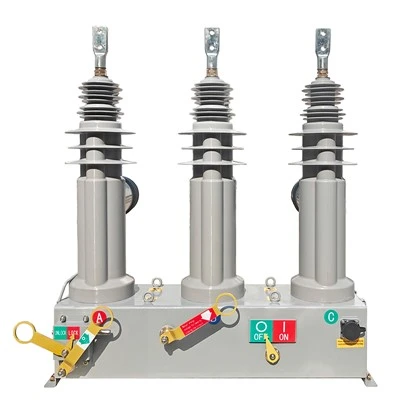
First, let’s set the scene: before reclosers became a thing, distribution grids were kind of… dumb. Like, if a tree branch fell on a line, or a squirrel decided to have a midday power snack, a fuse would blow. Then what? The whole section of grid went dark. Crews would have to drive out, find the blown fuse, replace it, and hope nothing else messed up that day. That could take hours, even for a tiny issue. Reclosers changed that, but they got a glow-up with smart grids—they’re not your grandpa’s old recloser anymore.
So how does a recloser actually work? Think of it as a fancy, automated circuit breaker that lives on the distribution lines (not in a substation) and can “try” to fix a problem on its own without a human touching it. Here’s the step-by-step, simplified: when a fault happens (that’s the tree branch, the squirrel, a wire that’s just being a jerk), the recloser’s sensors pick up the sudden spike in current way faster than any human or even a substation breaker. It immediately trips open, cutting power to the faulty section—first move done. Now, this is where the “reclose” part comes in: after a set amount of time (like 15 seconds, or a minute—we program that, obviously), it slams back closed to see if the fault’s still there.
If the fault’s gone (the branch fell off and bounced away, the squirrel skedaddled), boom—power’s back on in seconds, no one even notices a blip. That’s the magic trick. If the fault’s still there? It trips again, waits a little longer, tries another reclose. Usually, we program 2-4 tries—after that, it stays locked open, and sends a signal back to the control room so crews know exactly where to go, no driving around aimlessly.
Wait, but what’s the difference between a regular recloser and a smart grid recloser? Oh, big one. Old reclosers just did the tripping and reclosin’ based on current. Smart reclosers? They talk. Like, a lot. They connect to the grid’s central management system via fiber, radio, whatever—so they don’t have to work in a bubble. Let’s say there’s a storm coming, and the grid operator gets a forecast of high winds. They can pre-program the reclosers to tweak their settings a little: maybe do an extra quick first reclose to beat a falling line, or skip a try if they know heavy debris is coming. Also, smart reclosers give way more data—they can tell you exactly how much current was flowing when the fault hit, if it’s a temporary or permanent issue, even weather data from nearby sensors. That’s a game-changer for utilities that wanna get proactive instead of reactive.
Let me tell you a real story that stuck with me. A few years back, we sold a batch of smart reclosers to a utility in Ohio. They were dealing with tons of fall outages—tree branches snapping onto lines when the leaves got heavy. Before reclosers, a branch would blow a fuse, take out 10 homes, and crews would take 3 hours to find it. After installing our smart reclosers? One night, a forester called me at 10 p.m. saying the system pinged an alert: recloser tripped, first reclose worked. The branch had fallen, bounced off the line, and the power came back before anyone even noticed. No outage logs, no frustrated calls to 911, no crew sent out. That’s the stuff that makes my job worth it.
Now, let’s talk about why this matters for smart grids specifically. Smart grids aren’t just about adding fancy gadgets—they’re about making the grid more resilient, efficient, and able to handle all the new stuff coming in: EV chargers, solar panels on people’s roofs, even battery storage. Old grids couldn’t handle two-way power flow from rooftop solar, right? If your neighbor has solar and their panels are pumping power back into the line, a regular recloser might not know what to do, could accidentally cut off power to homes that’re feeding into the grid. Our smart reclosers are programmed to handle bidirectional flow, so they know the difference between a fault from a falling branch and excess power from a solar array. That’s non-negotiable now—with more and more distributed energy, reclosers can’t be one-trick ponies.
Another big thing: reliability stats. Utilities that switch to smart reclosers see a 30-50% drop in momentary outages, and a 20% drop in sustained outages. Think about that—for a city of 100,000 people, that’s millions of dollars saved every year in lost productivity, food that doesn’t spoil in fridges, hospitals not dealing with emergency generator switches every time a line goes down. I know a utility in Texas that used to have a whole department just handling outage calls during storm season. After upgrading to smart reclosers, that department got cut by half.
Wait, but I know what some people are thinking: “What if a recloser messes up? What if it tries to reclose on a live, dangerous fault and hurts someone?” That’s a valid worry. Back in the day, old reclosers had some issues with that, but modern smart ones have built-in safety checks. They sync with other grid devices, so if a line worker is out fixing a fault, the recloser can sense that (or the operator can flag it in the system) and lock open permanently, no more tries. Also, they use arc-suppression tech now—when they trip, they don’t spark like a old light switch, which reduces the risk of fires or electrocution. We test every single recloser we sell for that, no cutting corners.
Let me wrap this up for anyone who’s still confused. At the end of the day, reclosers are the tiny, unsung heroes of smart grids. They’re the reason your power comes back in 10 seconds instead of 2 hours when a squirrel has a bad day, the reason utilities can keep up with EVs and rooftop solar, the reason storm seasons aren’t total nightmares. We’ve been at this for years, worked with all kinds of utilities—from small rural ones to big metro operators—and we’ve seen firsthand how the right recloser setup can change a grid from “barely holding on” to “actually reliable.”

If you’re a utility guy or gal dealing with too many outages, struggling to integrate new energy sources, or just tired of your crew driving around for hours to fix a simple line issue, hit us up. We don’t do one-size-fits-all—we’ll walk your grid, figure out exactly what recloser setup you need, tweak the settings to match your area, and even help with installation if you need it. No sales gimmicks, no confusing contracts, just solid gear that works when you need it. Go solve those outage headaches for good.
Recloser References
- U.S. Department of Energy. (2022). Smart Grid Distribution Equipment: Reclosers and Their Role in Outage Reduction. DOE Office of Electricity Delivery and Energy Reliability.
- Electric Power Research Institute (EPRI). (2021). Smart Recloser Deployment: Case Studies and Performance Metrics for Distribution Resilience. EPRI Press.
- North American Electric Reliability Corporation (NERC). (2023). Distribution Grid Automation: Key Assets for Modernizing the U.S. Power System. NERC Technical Report.
- International Electrotechnical Commission (IEC). (2020). IEC 62271-111: High-Voltage Switchgear and Controlgear – Part 111: AC Circuit Breakers. IEC Standard.
- IEEE Power & Energy Society. (2022). Smart Distribution Grid Devices: Reclosers, Sectionalizers, and Fault Indicators. IEEE Tutorial Course.
Henan Yihe Electric Apparatus Co., Ltd.
As one of the most professional recloser manufacturers and suppliers in China, we’re featured by quality products and low price. Please rest assured to buy high-grade recloser made in China here from our factory. Customized orders are welcome.
Address: North Section of Weiwu Road, Changge City, Xuchang, Henan Province, China
E-mail: wangzhongjie@yiheea.com
WebSite: https://www.yiheea.com/
