Hey everyone, let’s cut to the chase – if you’re working in R&D, you know how much data you’re drowning in these days. From lab results to patient trials, product iterations to supply chain testing, every team is cranking out more numbers than ever, and analytics is the only way to make sense of it all. But here’s the thing I don’t hear enough folks talking about: the ethical landmines hiding in that R&D data analytics stack. As a R&D/Analytics supplier, I’ve seen firsthand how easy it is to mess up if you’re not paying attention – and how costly that mess can be, both for your work and your reputation. R&D / Analytics
Let’s start with the big one: data privacy. Wait, not just “follow GDPR” privacy – the stuff that happens before you even label a dataset. Let’s say a pharmaceutical client comes to us with data from a clinical trial they ran for a new diabetes drug. That data includes patient names, medical histories, sometimes even family details – not to mention the results from test subjects who dropped out mid-trial, or side effects that were never formally reported. A lot of teams will toss all that into an analytics tool, run a model to spot trends, and call it a day. But hold up – are you anonymizing it properly? I’ve seen instances where two seemingly unrelated data points (like a patient’s zip code and their specific drug response) could be linked back to a real person, even if you stripped the name. That’s not just a rule violation – that’s a breach of trust with the people who volunteered for the trial. As a supplier, we built our platform with built-in de-identification tools, but even so, we spend hours walking clients through how to scrub data the right way, not just the bare minimum required by law.
Then there’s bias in the models. R&D analytics is supposed to help you make better decisions, but if your data is skewed, your model will be too. Let’s take a consumer goods client we worked with last year – they were developing a new skincare line for people with sensitive skin. Their historical R&D data only included test results from people with light skin tones, so their algorithm recommended formulations that worked for that group but ignored issues for darker skin. The result? They spent six months launching a product that flopped with 30% of their target audience, and they missed out on a huge market segment. Worse, that bias isn’t just a business mistake – it’s an ethical one. If your R&D is supposed to serve a broad group, your analytics can’t just work for the people who were easiest to test. We actually do bias audits for every client’s model now – not just a once-over, but digging into the training data to make sure we’re not reinforcing old, unexamined assumptions. I’ve had clients push back on this, saying it’s “too time-consuming,” but the alternative is launching a product that alienates customers, or even worse, does harm.
Another hot button: data ownership and consent. Here’s a scenario: a university client is using our analytics to analyze public R&D datasets, which include information from small biotech startups that shared their old lab data in a collaborative space. The startups thought the data was just for research, but the university’s analytics model found a new material that could revolutionize battery tech – and they filed a patent. Suddenly, the startups that contributed the data are cut out of the profit, and they didn’t even agree to that. That’s a huge ethical gray area. As a supplier, we make it a point to outline data ownership clearly in our contracts, but we also push clients to go above and beyond. We help them create “consent layers” for data – so if a startup or even a lab employee shares data, they get to say how it can be used, whether that’s for academic research, commercial product development, or nothing at all. Last quarter, a client came to us because they accidentally used data from a lab that had explicitly banned commercial use – we helped them pull that data, redo their analysis, and reach out to the lab to apologize. That’s the kind of proactive stuff that builds trust, not just fixing mistakes after they happen.
Wait, let’s talk about transparency too. R&D teams often use analytics tools, but do they actually understand how the model is coming to a conclusion? If a model says “this formulation will be 20% more effective,” can the R&D team trace that back to a specific lab test, or is it a black box? That’s a problem because if the R&D team doesn’t know the “why” behind the analytics, they might make bad decisions. Worse, some teams use analytics to skip important steps – like testing a formulation just because the model says it will work, without validating it in a real lab. We’ve had clients come to us wanting to use our platform to cut corners on testing, and we always say no. Ethics shouldn’t be a box to tick – it’s about making sure your analytics is actually supporting good R&D, not replacing human judgment. That’s why our tool has explainable AI features, so you can see every step the model took, and link it back to your raw data. It takes a little more work up front, but it means you’re not making decisions based on something you can’t explain – and that’s better for everyone, from your team to your customers.
Then there’s data security. I know, this sounds like just another IT issue, but it’s tied right to R&D analytics. Let’s face it – R&D data is some of the most valuable stuff a company has. If a competitor gets a hold of your analytics models, they can reverse-engineer your next product, or steal your trial results, or even manipulate a model to make your product look worse. Last year, we had a client whose analytics dashboard was hacked, and their unlaunched product data was leaked. The damage? They lost a $2M partnership, and their R&D team had to spend six months redoing work instead of moving forward. As a supplier, we invest way more than the minimum in security – we use end-to-end encryption, regular penetration testing, and even offer dedicated access controls for R&D teams. But we also talk to clients about how they handle data on their end – like not letting interns access sensitive datasets, or not storing data on personal phones. Security isn’t just our job – it’s a shared responsibility, and ignoring that is unethical, plain and simple.
Wait, let’s not forget about unintended consequences. R&D analytics is designed to solve specific problems, but sometimes the ripple effects are huge. Let’s take a agricultural client we worked with – they were using analytics to optimize crop yields, and their model found that using a specific pesticide would boost yields by 15%. But what the model didn’t account for was that the pesticide would kill a key pollinator species in the area, leading to a decline in other crops that weren’t even part of the R&D project. That’s a classic case of narrow analytics missing the bigger picture. We now have a “holistic analytics” module in our platform that lets clients layer in external data – like environmental impact, community feedback, and long-term sustainability – so their models don’t just focus on one metric. It’s a small change, but it’s made a big difference for clients who used to see their analytics as a way to hit short-term goals, not build something that lasts.
I get it – for a lot of R&D teams, the pressure is on to move fast, launch products, beat competitors. Ethics can feel like a roadblock. But here’s the thing: the companies that prioritize ethical R&D analytics are the ones that stick around. We’ve seen clients who cut corners on privacy get hit with lawsuits, clients who ignored bias lose customer trust, clients who didn’t prioritize transparency make bad products that flop. At the end of the day, R&D is about solving problems for people – whether that’s a new drug, a better skincare product, higher crop yields. Your analytics should support that mission, not undermine it.
If you’re struggling with any of this – if you’re not sure if your data is private enough, if you’re worried your model is biased, or if you want to make sure your analytics is supporting good, ethical R&D – we’re here to help. Our team has worked with hundreds of R&D teams, from startups to big pharma, and we can walk you through how to build ethics into your analytics workflow, not just add it on as an afterthought. We don’t do one-size-fits-all solutions – every R&D project is different, so we’ll tailor our approach to your specific needs.

So if you’re ready to stop ignoring the ethical stuff and make your R&D analytics work for you and the people you’re serving, let’s connect. We can chat through your current challenges, walk through how our platform addresses these issues, and figure out what’s next for your team. Don’t wait until a small mistake turns into a big problem – let’s make ethics part of your analytics, from day one.
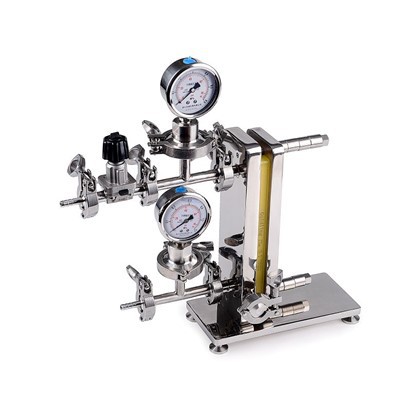
Tangential Flow Filtration System References
- Floridi, L., & Cowls, J. (2019). Artificial intelligence: the ethical issues. Oxford Review of Economic Policy, 35(4), 637-655.
- Calo, R. (2011). The boundaries of privacy. Harvard Journal of Law & Technology, 25(1), 1-46.
- Obermeyer, Z., et al. (2019). Dissecting racial bias in an algorithm used to manage the health of populations. Science, 366(6464), 447-453.
- London, A. J., & Kimmelman, J. (2015). The ethics of clinical trial data sharing. New England Journal of Medicine, 373(12), 1094-1096.
- Jones, D. S. (2018). The ethics of AI in R&D: beyond bias and privacy. Journal of Research Management, 61(3), 45-52.
Hangzhou Guidling Technology Co., Ltd.
Address: No.795, 18th Street, Qiantang New District, Hangzhou City, Zhejiang Province, China
E-mail: export1@guidling.net
WebSite: https://www.guidlingfiltration.com/
