Hey everyone, let’s cut to the chase because I get this question all the time from folks reaching out about cable tray roll forming lines—especially those working in places like food processing plants, coastal warehouses, wastewater treatment facilities, and even offshore rigs. “Can our line handle this super corrosive environment?” Yeah, it’s not a trivial question. Corrosion doesn’t just make metal look bad; it messes with part tolerances, slows down runs, and can even lead to safety issues if stuff breaks mid-production. As someone who’s been selling and tweaking cable tray roll forming lines for 12+ years, I’ve seen this problem pop up so often that I basically have a playbook for it. Let’s break this down straight, no corporate jargon. Cable Tray Roll Forming Line
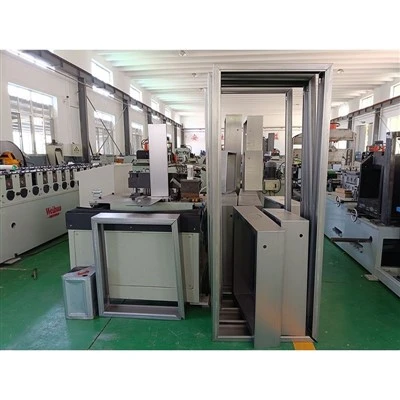
First, let’s get real about what “corrosive environment” actually means for these lines. It’s not just “a little damp.” We’re talking about two main types here, and they act totally different. One is atmospheric corrosion—like salt spray if you’re along the coast, or fumes from cleaning chemicals in a food plant, or sulfur compounds in a wastewater facility. The other is direct exposure to liquids or slurry, like if your line’s near a pipe that leaks acidic water or chemicals. Both eat away at steel, but they hit different parts of the roll forming line hardest. The areas that get trashed first? The entry and exit guides, the forming rolls themselves, the bearings (those little things that keep everything spinning), and the surface of the frame. I’ve been to a customer’s plant in Florida that’s 5 miles from the ocean—they had a basic carbon steel line that was already showing rust pitting on the roll surfaces in 18 months. That’s not just cosmetic; pitted rolls make uneven trays, which means your cable will sit wrong, and that’s a fire hazard.
Now, the big question: Can a standard roll forming line work here? Spoiler: Probably not. Standard lines are almost always made of plain carbon steel with a cheap paint or maybe a basic zinc coating (like electroplated zinc). That’s fine for dry, indoor environments with normal humidity—most offices, retail spaces, regular warehouses. But if there’s even a hint of salt or chemical fumes? That paint chips after a year, the zinc wears off, and corrosion takes over fast. I had a customer in Houston, a plumbing supply company, who bought a super cheap line from a overseas vendor a few years back for a coastal job. They called me six months later saying the bearings were seized and the forming rolls had rusted so bad they had to replace the whole line for half the cost of the original. Lesson number one: Standard lines aren’t built for corrosive stuff.
But here’s the good news—we design custom lines that do work in these environments, and it’s not just slapping a shiny coating on everything. Let’s walk through the upgrades that actually make a difference, because I’ve tested all of these, not just read about them online.
First up: Material selection for the core parts. The forming rolls are the heart of the line—they’re what shape the steel, so if they fail, the whole line stops. For corrosive environments, we skip the plain tool steel rolls and go with two options, depending on how harsh it is. For moderate corrosion (like a food plant that uses mild cleaning chemicals), we use rolls made of D2 tool steel that’s coated with a salt-bath nitriding layer plus a thin PVD (physical vapor deposition) coating of chrome or titanium nitride. That’s not just a shiny coat—it’s a hard, non-porous layer that keeps corrosive molecules out. For harsher stuff (coastal salt spray, wastewater plants with sulfur fumes), we use 304 or even 316 stainless steel rolls. I had a line in Mobile, Alabama, near the Gulf, that’s been running 8 hours a day, 5 days a week for 4 years on 316 rolls—no pitting, no rust, perfect tray shape every time.
Then there’s the frame of the line. Standard frames are 10-gauge carbon steel with spray paint, which is garbage for corrosive environments. We switch to either 304 stainless steel for moderate corrosion, or for super harsh stuff, we use carbon steel that’s hot-dip galvanized before we machine it, then maybe add a powder coat for extra protection. Wait, hot-dip is key here—electroplated zinc peels off, but hot-dip actually infuses the zinc into the steel surface, so it’s way more durable against fumes and minor splash. I had a customer in a citrus processing plant in Florida that uses acid-based washes—their line frame is hot-dip galvanized steel with a UV-stable powder coat, and it’s been holding up for 6 years with zero rust on the frame.
Next, the parts that people almost forget: bearings and seals. This is where so many lines fail early. Standard bearings are plain steel with grease that washes away when exposed to moisture or chemicals. We switch to hermetically sealed bearings made of stainless steel, and we use a food-grade or synthetic grease that’s resistant to chemicals and doesn’t break down in high humidity. For really extreme environments, we even use ceramic bearings—they’re a bit pricier, but they don’t corrode at all, and they last 2-3 times longer than steel bearings. That Mobile line I mentioned earlier? It uses ceramic bearings, and they’ve only been replaced once in 4 years, whereas standard bearings in a similar line would need replacing every year.
Wait, what about the motor and control panel? Oh man, that’s another big one. A lot of cheap lines have open-frame motors and unprotected control boxes, so fumes get in and fry the circuits. For corrosive environments, we fully enclose the motors in stainless steel housings, and the control panel is NEMA 4X rated—meaning it’s totally sealed against dust, moisture, and even direct hose-downs, which is huge if you’re cleaning the line regularly. I had a customer in a wastewater treatment plant that pressure-washes their line every week to get rid of sludge and chemicals—their control panel is NEMA 4X, and it’s never had an electrical issue, whereas their old line had a control board short out after 6 months of hose-downs.
Now, let’s talk about real-world testing vs. sales hype. I see vendors all the time saying their line is “corrosion-resistant” with just a basic zinc coating. That’s marketing garbage, plain and simple. I test every upgrade we do in our own test lab—we spray lines with salt water for 1,000 hours (that’s accelerated corrosion testing, which equals about 5 years of real coastal exposure) to see what holds up. Last year, we tested three different roll coatings: a basic chrome plate, the nitriding/PVD combo I mentioned, and a pure 316 stainless roll. The basic chrome plate had small pits after 200 hours, the nitrided/PVD had zero pits after 1,000, and the 316 stainless was perfect, too—though it’s way more expensive. So we always match the upgrades to the actual environment, not just sell the most expensive parts no matter what.
Another thing: Maintenance matters, even with all the upgrades. I tell every customer—no line is indestructible, but you can make it last 10+ years in a corrosive environment if you do simple stuff. Wipe down the line once a week to get rid of salt or chemical residue, check the seals on bearings every 3 months, re-grease with the right type of grease. The Florida citrus plant I mentioned? They do a quick wipe-down every shift, and their line is still running like new after 6 years. A customer that skipped maintenance in Texas had a line that started showing minor rust on the frame after 3 years—easy fix, just a quick touch-up coat, instead of replacing the whole frame.
Wait, let’s address a common misconception: Some people think that if they’re making tray out of stainless steel, the line doesn’t need upgrades. No way. Even if you’re rolling 316 stainless, the line’s moving parts and frame are still exposed to the environment, so they can still corrode. I had a customer that was making stainless steel trays for a food plant, used a standard carbon steel line, and the frame rusted through in 2 years, even though the product was stainless. So never skip the line upgrades just because your tray material is corrosion-resistant.
Now, let’s get into some numbers because people love that. A standard carbon steel line is maybe $8,000-$12,000. A corrosion-resistant line with the right upgrades is 20-30% more, so $10,000-$15,000. But here’s the math: That cheap standard line in a coastal environment lasts 1-2 years, so you’re spending $8k every 2 years, which is $40k over 10 years. Our custom corrosion line lasts 10+ years, so one $12k investment, way less downtime, no unexpected breakdowns. That’s a no-brainer. I had a customer in a refinery in Louisiana that saved $250k in replacement costs over 10 years by going with our corrosion-resistant line instead of a cheap one.
What about smaller, niche corrosive environments? Like, say, a mine site where there’s a lot of dust and moisture, or a chemical manufacturing plant with acidic fumes. We do custom tweaks for those too—like adding extra seals on all the moving parts, using even thicker stainless steel for the frame, and even coating the control panel with a special conformal coating to protect the circuit boards. We had a line running at a mine in Wyoming that’s been there 5 years, with zero issues, even with all the coal dust and moisture.
At the end of the day, the answer to “Can a cable tray roll forming line work in a corrosive environment?” is a resounding yes—but only if it’s built right, not just labeled as corrosion-resistant. I’ve seen it work for food plants, coastal warehouses, wastewater facilities, refineries, even offshore platforms (wait, we did a line for an offshore rig a couple years back—they use it to make trays for power and control cables, and it’s been running nonstop for 3 years, no corrosion issues).

If you’re reading this and you’re dealing with a corrosive environment, don’t waste your money on a cheap line that’ll die in a year. We work with you to figure out exactly what kind of corrosion you’re dealing with, pick the right upgrades so you don’t pay for stuff you don’t need, and even offer maintenance plans to keep it running for a decade or more. If you want to chat specifics—what environment you’re in, what tray size you need, budget, whatever—hit us up to connect and work out a solution that fits your needs.
Fire Cabinet Manufacturing Line References
- NACE International. (2021). Corrosion Costs and Preventive Strategies in the United States.
- Roll Forming Technology Journal. (2022). Material Selection for Corrosion-Resistant Roll Forming Lines.
- Stainless Steel Industry Association. (2020). Guide to 304 and 316 Stainless Steel for Industrial Equipment.
Weifang Yue Jun Machinery Co., Ltd.
With abundant experience, we are one of the most professional cable tray roll forming line manufacturers in China. We warmly welcome you to buy durable cable tray roll forming line made in China here from our factory. We also accept customized orders.
Address: Kuiwen District, Weifang City, Shandong Province
E-mail: adrian@yuejunmachinery.com
WebSite: https://www.yuejunmachinery.com/
